
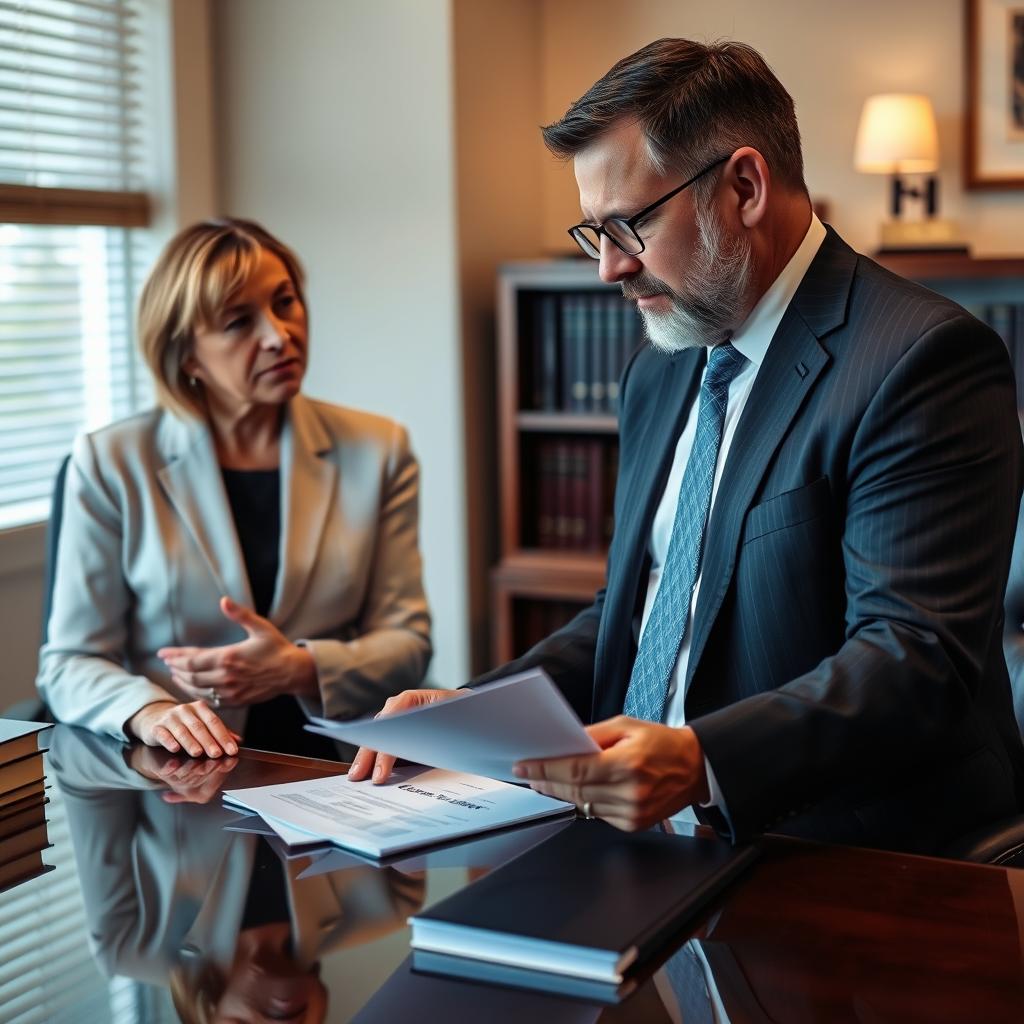
Complex Property Division Lawyer York County, VA
When a marriage in York County involves significant assets, business interests, retirement accounts, or real estate, dividing that property under Virginia’s equitable distribution framework requires careful legal analysis. Law Offices Of SRIS, P.C. represents clients in complex property division matters throughout York County, including Yorktown, Grafton, Tabb, and Seaford. Our attorneys appear at the York County Circuit Court at 300 Ballard Street, Yorktown, VA 23690, for divorce and equitable distribution proceedings. To request a consultation, call (888) 437-7747. Law Offices Of SRIS, P.C. — Advocacy Without Borders.
What Complex Property Division Means in York County
Virginia is an equitable distribution state. The court does not automatically split property 50/50. Instead, the judge classifies each asset as marital, separate, or hybrid, then values it, and ultimately distributes the marital estate according to eleven statutory factors. Complex property division arises when the marital estate includes items that are difficult to value or trace — such as closely held businesses, professional practices, stock options, restricted stock units, deferred compensation, multi-state real estate holdings, or significant retirement assets.
For York County residents, the York County Circuit Court on Ballard Street handles all equitable distribution and divorce matters. The Juvenile and Domestic Relations District Court addresses custody, visitation, and support, but the actual property division occurs only in the Circuit Court. Because the court has broad discretion in weighting the statutory factors, presenting a clear and well-documented financial picture is essential. The factors include the duration of the marriage, the contributions of each party to the acquisition and maintenance of property, the age and health of the parties, the circumstances that contributed to the dissolution, and how and when property was acquired, among others. When high-value assets are involved, the court may require expert testimony from forensic accountants or business valuation professionals to establish fair market value.
How Mr. Sris and His Of Counsel Handle Complex Property Division Cases
Cases involving substantial assets demand a methodical approach. Mr. Sris and his Of Counsel begin by working with clients to identify all marital and separate property. This includes reviewing deeds, bank and investment statements, business tax returns, retirement plan documents, and any prenuptial or postnuptial agreements. The team collaborates with trusted financial attorneys when appraisals or tracing of separate-property contributions are needed. Once the financial picture is clear, the attorneys focus on negotiating a property settlement agreement. In many instances, the parties can resolve the division without a trial.
When settlement is not possible, the firm litigates the equitable distribution issues before the York County Circuit Court. Mr. Sris testified before the Virginia House Courts of Justice Committee in support of 2019 HB 635 (chief patron Del. David Bulova), which revised subdivision (g) of § 20-107.3 to address QDRO-related procedural issues concerning retirement-plan divisions. That firsthand knowledge of the legislative history can inform the firm’s approach in cases involving qualified retirement accounts. Throughout the process, the team keeps the client informed and works toward a thorough resolution that addresses both immediate financial concerns and long-term stability.
About Mr. Sris and His Of Counsel Team
Mr. Sris, Owner and Founder of Law Offices Of SRIS, P.C., has practiced law since 1997. He is a former prosecutor and is admitted to practice in Virginia, Maryland, the District of Columbia, New Jersey, and New York. His Of Counsel team includes attorneys with backgrounds in law enforcement, complex civil litigation, and financial analysis. Together, Mr. Sris and his Of Counsel bring over 120 years of combined legal experience. Results may vary. The firm has documented 4,739+ case results across all practice areas since 1997.
Frequently Asked Questions
What is complex property division in a Virginia divorce?
You are not required to split everything 50/50. Complex property division involves allocating high-value or hard-to-value marital assets — such as business interests, professional practices, real estate holdings, retirement accounts, or stock options — under Virginia’s equitable distribution statute. The court examines classification, valuation, and distribution of property, often with the help of forensic accountants and business valuators. Equitable distribution does not always mean an equal split; the judge weighs eleven statutory factors. Legal guidance helps ensure all assets are properly identified and valued.
How does equitable distribution work in York County?
The judge first classifies property as marital, separate, or hybrid, then assigns a value to each asset, and finally distributes the marital estate equitably. York County Circuit Court handles all equitable distribution proceedings as part of a divorce case. The process may require detailed financial disclosures, business appraisals, and tracing of separate-property contributions. If the parties cannot agree, the judge decides based on the evidence presented. An experienced attorney can help you build a thorough record for the court.
What types of assets are divided in a high-asset divorce?
Beyond the family home and bank accounts, a high-asset divorce may involve business valuations, professional practice goodwill, investment portfolios, restricted stock units, deferred compensation, pensions, 401(k)s, IRAs, rental properties, and even intellectual property. Each asset type requires careful analysis to determine its classification as marital or separate property and its fair market value. Proper valuation often requires input from financial attorneys, and an attorney experienced in complex property division can coordinate that work.
Do I need a lawyer to handle property division in York County?
You are not required to have an attorney, but navigating equitable distribution without legal guidance is risky. Mistakes in classifying or valuing assets can lead to an unfair result that is difficult to undo. An attorney experienced in complex property division can ensure proper financial disclosures, identify hidden assets, and present a thorough case to the court. To discuss your specific situation, contact Law Offices Of SRIS, P.C. at (888) 437-7747.
Can we settle property division out of court?
Yes. Many couples resolve property division through a signed separation agreement, known in Virginia as a property settlement agreement. The agreement must be in writing and signed by both parties to be enforceable. If it resolves all issues, the divorce can proceed as an uncontested matter, generally moving faster than a litigated case. For a consultation about preparing a property settlement agreement, reach Law Offices Of SRIS, P.C. at (888) 437-7747.
What should I bring to a consultation about property division?
Bring a list of all assets and debts, including real estate deeds, bank and investment statements, business tax returns, retirement account summaries, and any prenuptial or postnuptial agreements. Also have your spouse’s financial information if available. The more complete the picture, the better your attorney can evaluate the likely division outcome. Reach our Richmond location at (888) 437-7747 to schedule an appointment.
Related family law locations:
James City County Family Law Lawyer ·
Williamsburg Family Law Lawyer ·
Fairfax County Family Law Lawyer
Virginia statutes and court resources:
Va. Code § 20-91 ·
York County courts
Richmond Location: 7400 Beaufont Springs Drive, Suite 300, Room 395, Richmond, VA 23225 · (804) 201-9009
Consultations available by appointment.
Attorney advertising. Prior results do not guarantee a similar outcome. Results may vary.
Case results depend on a variety of factors unique to each case.