
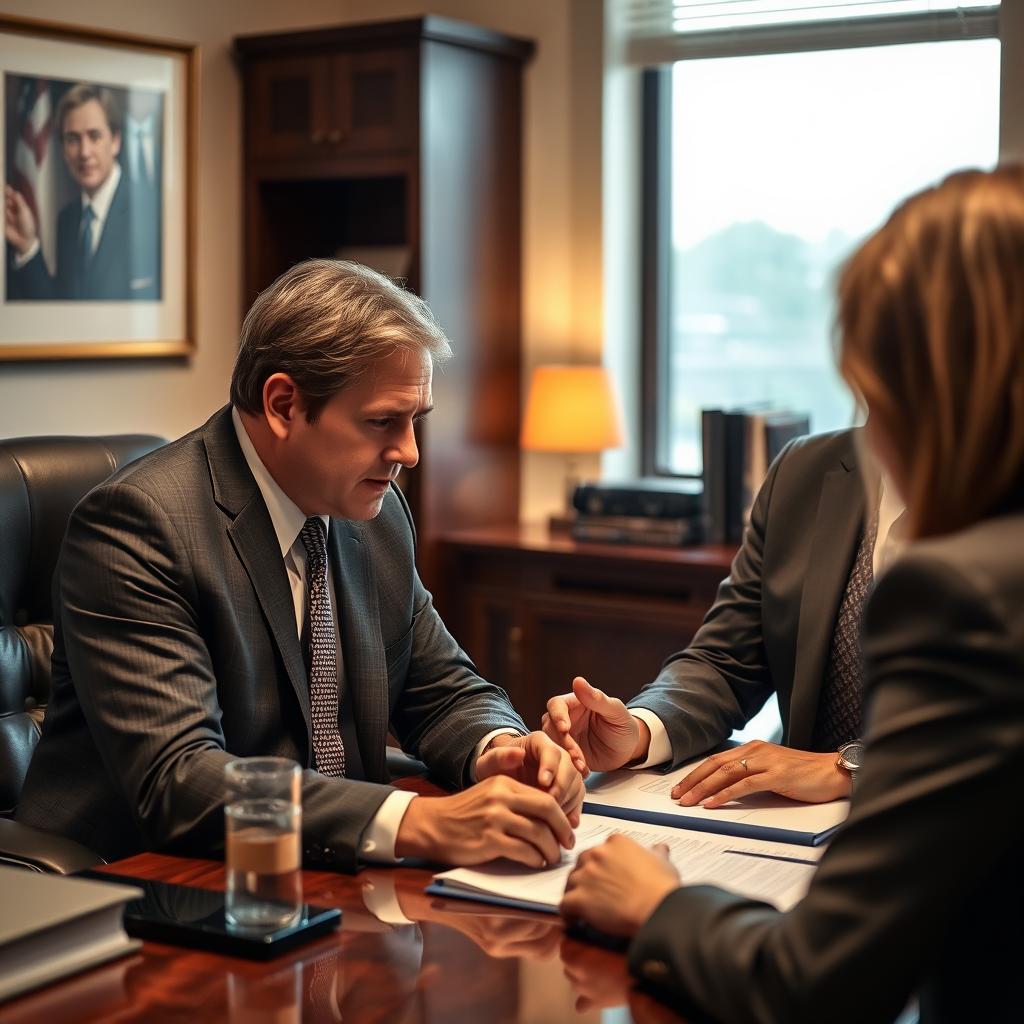
Retaliating Against a Witness lawyer Virginia Beach, VA
Federal charges for retaliating against a witness carry severe consequences, including lengthy prison terms and a permanent felony record. These cases are prosecuted actively by the United States Attorney’s Office for the Eastern District of Virginia, with most matters heard at the Norfolk courthouse serving Virginia Beach and the Hampton Roads region. Under federal obstruction, perjury, and witness-tampering statutes—18 U.S.C. §§ 1503–1520 and 1621–1623—penalties may range from five to twenty years depending on the specific subsection charged. There is no parole in the federal system, and the Sentencing Guidelines often produce significant incarceration terms even for first-time defendants. You need an experienced federal defense team that understands how these charges are built and can protect your rights from the earliest stage. Mr. Sris and his Of Counsel at Law Offices Of SRIS, P.C. have handled federal criminal matters across the Eastern District, including those arising in Virginia Beach. Reach Law Offices Of SRIS, P.C. at (888) 437-7747 to discuss your situation. Law Offices Of SRIS, P.C. — Advocacy Without Borders.
What Retaliating Against a Witness Means in Virginia Beach
Retaliating against a witness involves any attempt to threaten, harm, intimidate, or otherwise punish a person because that person has provided testimony, information, or evidence in a federal proceeding. The underlying proceeding could be a grand jury investigation, a criminal trial, a civil suit, or an administrative hearing. In Virginia Beach, these allegations commonly arise in the context of ongoing federal drug conspiracy prosecutions, fraud investigations, or violent‑crime cases investigated by the FBI, DEA, or ATF. The Eastern District of Virginia, frequently referred to as the “Rocket Docket,” moves cases rapidly, and a retaliation charge can be added to an existing indictment with little advance warning. The Norfolk Division, which handles cases for Virginia Beach, Chesapeake, and the broader Tidewater area, has a reputation for strict procedural timelines and substantial pretrial detention if the government argues dangerousness.
Because the government must prove a corrupt intent to interfere with the administration of justice, the strength of its evidence—witness statements, recorded communications, or other documents—drives the direction of the case. The statutes are broadly worded; an act that might appear minor, such as a heated phone call or an online post, can form the basis of an obstruction charge. Federal conviction rates exceed ninety percent nationally, so an early and thorough investigation by defense counsel is critical. The U.S. Attorney’s Office in Norfolk draws on experienced trial attorneys, and many federal judges in the Alexandria‑based district have overseen complex white‑collar and violent‑crime dockets. Mr. Sris and his Of Counsel are familiar with the local federal court and work to identify weaknesses in the prosecution’s case before formal charges are brought.
How Mr. Sris and His Of Counsel Handle Retaliating Against a Witness Cases
When someone is accused of retaliating against a witness, the defense team immediately begins evaluating the factual basis of the allegation. This includes obtaining and reviewing all relevant documents, witness statements, and electronic communications, often through private investigators and forensic experts. The goal is to determine whether the government can actually prove a link between the defendant’s conduct and a protected federal proceeding, and whether the communication or action was truly retaliatory rather than a expression of frustration or a misunderstanding. Experience in federal court allows the team to challenge procedural missteps—improper questioning, failure to give Miranda warnings, or violations of the Speedy Trial Act—that can lead to suppression of evidence or dismissal.
Because federal sentencing operates under the Sentencing Guidelines with judicial discretion post‑Booker, early plea negotiations that include a cooperation or substantial‑assistance provision can be essential. Mr. Sris and his Of Counsel explore every lawful avenue to mitigate the exposure, whether through negotiated resolution or by taking the case to trial. They work with clients to present a complete picture—personal history, lack of prior criminal conduct, and any mitigating factors—that may influence the outcome. Throughout the process, the team stays in regular contact with the client, explaining each development clearly and ensuring that all deadlines are met. The timeline of a federal case varies, but a methodical approach from the day of investigation can make a significant difference in the final result.
About Mr. Sris and His Of Counsel Team
Mr. Sris, Owner and Founder of Law Offices Of SRIS, P.C., has been practicing since 1997. He is a former prosecutor who understands how the government builds witness‑retaliation cases and where those cases are most vulnerable. He is admitted in Virginia, Maryland, the District of Columbia, New Jersey, and New York, and has represented clients in federal court across multiple jurisdictions. Mr. Sris testified before the Virginia House Courts of Justice Committee in support of 2019 HB 635 (chief patron Del. David Bulova).
When you work with Law Offices Of SRIS, P.C., you also benefit from the firm’s Of Counsel team—experienced lawyers who collectively bring over 120 years of combined legal experience to federal defense matters. Results may vary. Mr. Sris and his Of Counsel have documented 4,739+ case results across all practice areas since 1997. The Richmond location at 7400 Beaufont Springs Drive, Suite 300, Room 395, Richmond, VA 23225 serves clients throughout Virginia, including those facing charges in the Eastern District’s Norfolk Division. Reach the firm at (888) 437-7747.
Frequently Asked Questions
How does a Virginia lawyer defend against retaliating against a witness charges?
Defense strategies commonly focus on whether the defendant actually knew of an ongoing federal proceeding and whether any action was taken with the specific intent to retaliate, threaten, or intimidate. Counsel may challenge the adequacy of the government’s proof—for example, by demonstrating that the communication was ambiguous, unrelated to testimony, or taken out of context. Procedural defenses include challenging the admissibility of statements obtained in violation of Miranda or evidence gathered through an improper search. In some instances, mental-health factors or lack of capacity can be raised. Mr. Sris and his Of Counsel examine every angle under the applicable federal obstruction statutes to build the strong $1 for the individual case.
What should I do if I am facing retaliating against a witness charges in Virginia?
Contact a federal criminal defense attorney immediately—do not discuss the case with anyone else. Preserve all relevant emails, text messages, call logs, and social‑media posts, but do not delete anything or try to contact the alleged witness. Federal authorities may already be monitoring your communications, and any attempt to reach out could create additional charges. Your lawyer will advise you on how to handle contact from investigators. Prompt legal intervention can affect pretrial detention decisions and the preservation of evidence favorable to your defense.
What are the penalties for retaliating against a witness in Virginia?
Under federal obstruction and perjury statutes (18 U.S.C. §§ 1503–1520, 1621–1623), a conviction can result in a prison sentence of five to twenty years, depending on the specific charge and the severity of the conduct. If the retaliation involved violence, killing, or attempted killing, the maximum penalty may be increased to life imprisonment or the death penalty. Fines can reach a large sum or more for individuals. Additionally, a federal felony conviction carries collateral consequences such as loss of firearm rights, difficulty obtaining employment, and, for non‑citizens, immigration removal proceedings. Sentencing is guided by the Federal Sentencing Guidelines, though judges retain substantial discretion.
How long does a federal criminal case take in Virginia?
The timeline of a federal case varies greatly depending on the complexity of the investigation, the number of defendants, and the court’s calendar. The Speedy Trial Act requires that an indictment be returned within thirty days of arrest and that trial commence within seventy days of indictment, but many excludable delays are permitted—motion practice, discovery review, and plea negotiations often extend the pretrial period. In the Eastern District of Virginia, known for its fast docket, a straightforward witness‑retaliation case might be resolved within several months, while complex, multi‑defendant cases can take a year or longer. Your attorney can provide a case‑specific estimate after reviewing the indictment and discovery.
Can federal retaliating against a witness charges be dropped?
Yes, charges can be dismissed if the government lacks sufficient admissible evidence, if a material witness becomes unavailable, or if the prosecution determines that the case cannot be proved beyond a reasonable doubt. Defense counsel may also file a motion to dismiss for legal deficiencies—such as failure to state an offense under the relevant statute, or violation of the defendant’s right to a speedy trial. In some instances, pre‑indictment negotiation results in the government deciding not to charge the offense at all. While federal prosecutors rarely abandon a case once indicted, a well‑prepared defense can highlight weaknesses that lead the government to reconsider its position.
Do I need a lawyer for retaliating against a witness charges in Virginia?
Yes. Federal witness‑retaliation charges are felonies that carry lengthy prison sentences and life‑altering consequences. The U.S. Attorney’s Office has extensive resources, and federal prosecutors are experienced in building obstruction cases. Without an attorney, you risk making statements that can be used against you, misunderstanding the charges, and sentencing exposure. Experienced defense counsel can examine the government’s evidence, identify constitutional and procedural violations, and negotiate with prosecutors from a position of knowledge. The earlier a lawyer is involved, the more options may be available to protect your rights and freedom.
Related Virginia Federal Criminal Defense Pages: Fairfax County Federal Criminal Attorney · Fairfax City Federal Criminal Defense · Falls Church City Federal Criminal Lawyer · Prince William County Federal Criminal Attorney · Manassas City Federal Criminal Defense
Official Virginia legal resources: Virginia Code Title 13.1 · SCC Business Entity Filings · Virginia Courts
Attorney advertising. Prior results do not guarantee a similar outcome.
Results may vary.
Case results depend on a variety of factors unique to each case.