
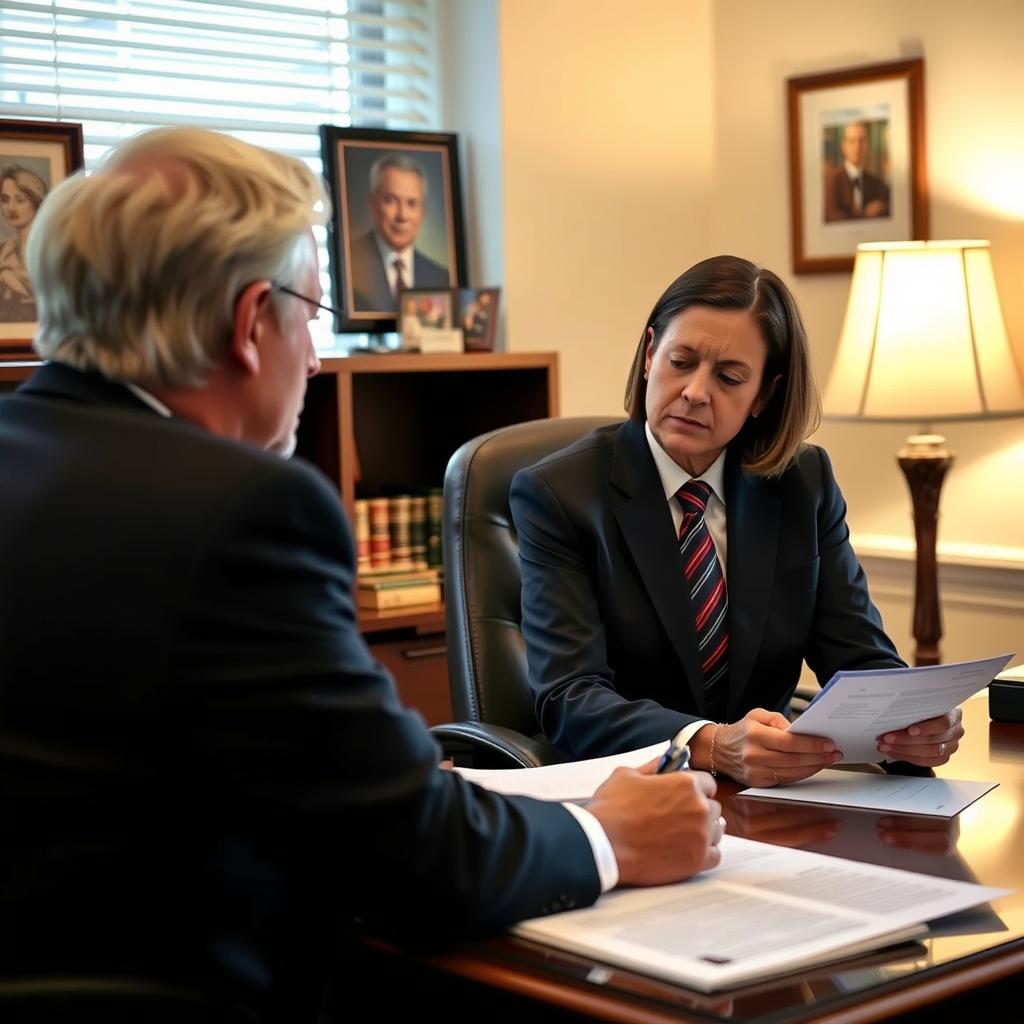
Bribery of Public Officials and Witnesses lawyer Suffolk, VA
Federal bribery charges—whether involving a public official, a witness, or an attempt to influence testimony—are among the most serious accusations the U.S. Attorney’s Office can bring. In Suffolk, a federal investigation typically originates with agencies such as the FBI or IRS‑CI before an indictment is returned in the U.S. District Court for the Eastern District of Virginia. The Norfolk Division of that court handles matters arising in the City of Suffolk and surrounding communities. Mr. Sris, Owner and Founder of Law Offices Of SRIS, P.C., represents individuals facing allegations under the federal bribery and obstruction statutes throughout Virginia. If you have learned you are under investigation or have been charged, early counsel can help protect your rights at every stage. Reach Law Offices Of SRIS, P.C. at (888) 437-7747 to discuss your situation. Law Offices Of SRIS, P.C. – Advocacy Without Borders.
Defending Federal Bribery Charges in Suffolk, Virginia
Federal bribery prosecutions often rely on the testimony of cooperating witnesses, electronic surveillance, or financial records. The government must prove that a defendant corruptly gave, offered, or promised something of value to a public official, or that a person corruptly influenced, obstructed, or impeded an official proceeding or witness. Because the statutory framework draws on multiple provisions—including the general bribery statute and the obstruction-of-justice chapters of the United States Code—each case turns on a specific set of facts.
For Suffolk residents, the initial appearance and detention hearing will be held before a magistrate judge in Norfolk. A grand jury indictment is required for felony charges. From that point forward, the case proceeds under the Federal Rules of Criminal Procedure and the advisory United States Sentencing Guidelines. The sentencing court retains discretion, but mandatory minimums may apply depending on the alleged conduct. Mr. Sris and his Of Counsel team are familiar with the practices of the Eastern District and work to build a defense tailored to the specific allegations and evidence the government presents.
Frequently Asked Questions
What is federal bribery of public officials and witnesses?
Federal bribery of public officials and witnesses involves corruptly giving, offering, or receiving anything of value with the intent to influence an official act, or corruptly attempting to influence, obstruct, or impede the testimony of a witness in an official proceeding. The charges are prosecuted under several sections of Title 18, and they carry severe consequences, including imprisonment and fines. Each element must be proven beyond a reasonable doubt, and defenses may challenge the existence of a corrupt intent or the sufficiency of the government’s evidence.
How does a lawyer defend against bribery of public officials and witnesses charges?
Defense strategies for bribery of public officials and witnesses in Virginia may include challenging the evidentiary basis for the charge, examining the credibility of cooperating witnesses, investigating whether the government exceeded proper investigative bounds, and presenting mitigating facts. An experienced federal defense attorney will also evaluate any pretrial motions that could narrow the scope of the case or exclude improperly obtained evidence.
What should I do if I am facing bribery of public officials and witnesses charges in Suffolk?
If you are facing bribery of public officials and witnesses charges in Suffolk, the most important step is to consult a federal criminal attorney immediately. Do not discuss the case with anyone other than your lawyer. Preserve all documents and communications that may relate to the matter, and do not attempt to contact witnesses or government officials on your own. Early involvement of counsel can affect bail, discovery, and the course of the investigation.
What are the penalties for bribery of a public official in federal court?
The potential penalties for federal bribery are determined by the specific statutory provision under which charges are brought. Consequences can include a term of imprisonment, a fine, a term of supervised release, and restitution if applicable. Sentencing is guided by the United States Sentencing Guidelines, although judges retain discretion in many areas. Because the range of possible outcomes is broad, a detailed evaluation of the charges and the individual’s history is essential.
Can bribery charges be dropped before trial?
Bribery charges can be dismissed if the government’s case lacks sufficient evidence or if a successful pretrial motion excludes critical proof. In some instances, the U.S. Attorney’s Office will agree to drop charges as part of a broader resolution. Every case is fact‑specific, and the likelihood of a dismissal depends on the strength of the government’s case and any procedural or constitutional challenges that counsel may raise.
Does a bribery conviction require a mandatory minimum sentence?
Certain federal bribery and corruption offenses carry mandatory minimum prison terms, while others do not. Whether a mandatory minimum applies depends on the precise statutory section charged and the circumstances of the alleged offense. An attorney can review the indictment and advise on the sentencing exposure. Even where a mandatory minimum is present, exceptions such as the safety valve or substantial assistance provisions may be available in appropriate cases.
How long does a federal bribery case take in the Eastern District of Virginia?
The timeline for a federal bribery case varies based on the complexity of the investigation, the number of defendants, and the court’s calendar. The Speedy Trial Act sets certain outer limits, but numerous pretrial motions and discovery negotiations can extend the process. A straightforward case might resolve within several months, while a complex, multi‑defendant prosecution can take a year or more. Your attorney can provide a rough estimate after reviewing the specific facts.
Will I be held in custody if charged with bribery?
Detention decisions in federal court are made at an initial appearance and detention hearing. The court considers factors such as the nature of the offense, the weight of the evidence, the defendant’s ties to the community, and any risk of flight or danger to the community. Many individuals charged with non‑violent bribery offenses are released on conditions, but each case is decided on its own facts. Having counsel present at the detention hearing is critical.
How do I find a federal criminal lawyer near Suffolk?
When looking for a federal criminal lawyer near Suffolk, seek counsel who regularly practices in the U.S. District Court for the Eastern District of Virginia. An attorney familiar with the Norfolk Division and the Assistant U.S. Attorneys who handle public corruption matters can offer practical insight. Law Offices Of SRIS, P.C. represents clients throughout Virginia and appears routinely in the Eastern District. Call (888) 437-7747 to schedule a consultation.
What is the role of the grand jury in a federal bribery case?
In federal felony cases, including bribery, a grand jury reviews the prosecutor’s evidence and determines whether probable cause exists to return an indictment. The grand jury does not decide guilt; it acts as a screening body. Defense counsel generally does not appear before the grand jury, but an attorney can advise a client who is subpoenaed to testify or who learns an investigation is underway.
Can a bribery charge be based on circumstantial evidence?
Yes, the government may prove its case through circumstantial evidence, such as a pattern of unexplained payments, intercepted communications, or unusual business dealings. The prosecution is not required to produce a videotaped exchange of cash or an explicit agreement. A defense attorney will examine whether the circumstantial evidence truly proves corrupt intent beyond a reasonable doubt or whether it equally supports an innocent explanation.
What is the difference between bribery and an illegal gratuity?
Federal law distinguishes between bribery, which requires a corrupt intent to influence an official act, and the payment of an illegal gratuity, which simply rewards a past official act without any prior agreement. Both are unlawful, but the elements and potential penalties differ. An attorney can assess the specific allegations and determine whether the government’s theory more closely resembles one offense or the other.
About Mr. Sris and His Of Counsel Team
Mr. Sris, Owner and Founder of Law Offices Of SRIS, P.C., has practiced federal criminal defense since 1997. A former prosecutor, he brings a working understanding of how the U.S. Attorney’s Office builds corruption cases. Mr. Sris testified before the Virginia House Courts of Justice Committee in support of 2019 HB 635 (chief patron Del. David Bulova). Together with his Of Counsel, he provides defense representation in the U.S. District Court for the Eastern District of Virginia and other federal venues. Mr. Sris and his Of Counsel bring extensive combined legal experience. Results may vary. Reach the firm at (888) 437-7747.
Federal Criminal Lawyer Fairfax County |
Federal Criminal Lawyer Prince William County |
Federal Criminal Lawyer Manassas |
Federal Criminal Lawyer Chesapeake
For additional information, see the Virginia Judicial System website and the Virginia Code. Federal statutes are accessible through the United States Code.
Attorney advertising. Prior results do not guarantee a similar outcome. Case results depend on a variety of factors unique to each case. Results may vary.