
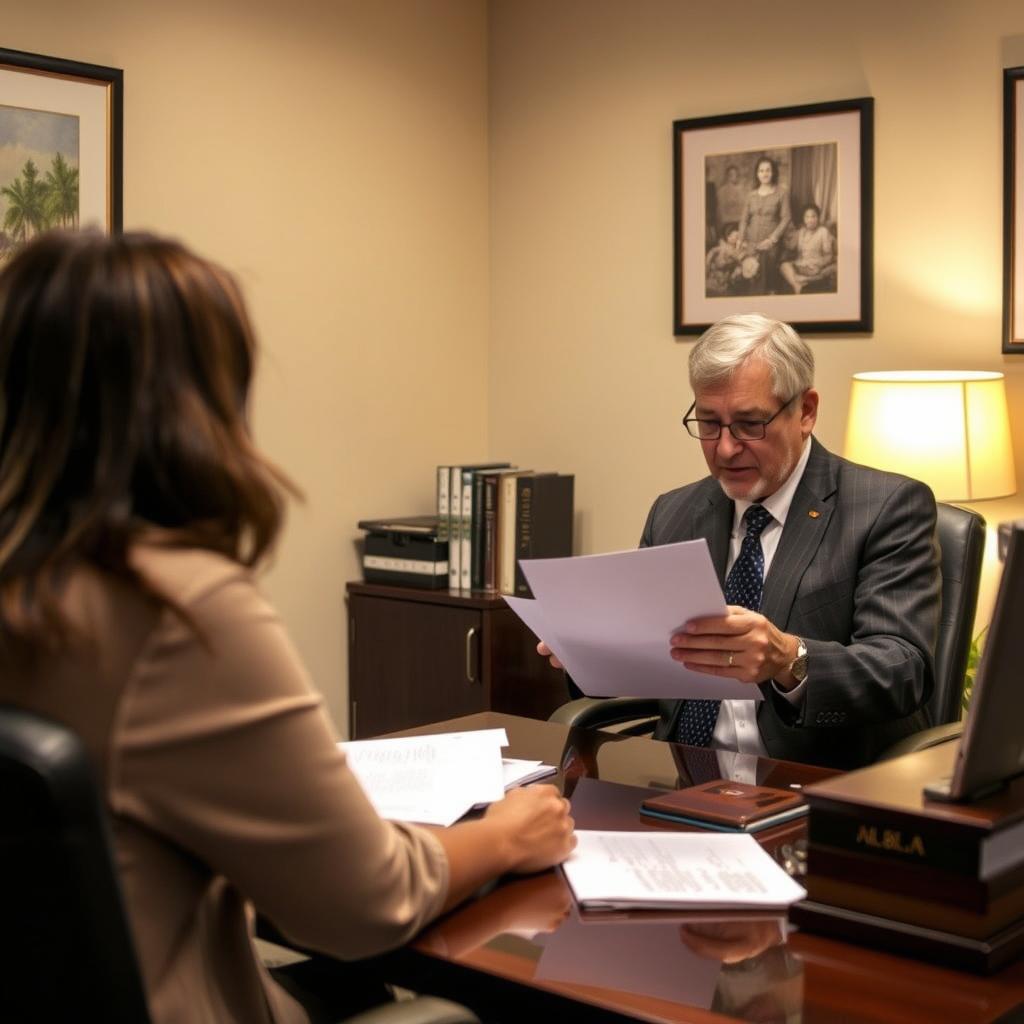
Family Visa Lawyer Chesapeake, VA
Family-based immigration allows U.S. Citizens and lawful permanent residents to reunite with close relatives by sponsoring them for a green card. The process involves detailed petitions, documentary evidence of the qualifying relationship, and interaction with U.S. Citizenship and Immigration Services (USCIS) and, in some cases, the Executive Office for Immigration Review (EOIR). For residents of Chesapeake, Virginia, and surrounding communities—including Great Bridge, Greenbrier, and Deep Creek—having an experienced family visa lawyer helps navigate the requirements, avoid delays, and address challenges such as requests for evidence (RFEs), inadmissibility waivers, or consular processing hurdles. Law Offices Of SRIS, P.C. concentrates its immigration practice on family visa matters, assisting clients with spouse visas, fiancé(e) visas, parent and child petitions, and sibling category applications. Contact the firm at (888) 437-7747 to request a consultation. Law Offices Of SRIS, P.C. – Advocacy Without Borders.
What Family Visa Law Means in Chesapeake, Virginia
U.S. Immigration law is exclusively federal, governed by the Immigration and Nationality Act (INA), codified primarily in Title 8 of the United States Code. Family visa petitions are adjudicated by USCIS, and removal proceedings for denied or enforcement cases are heard before the Arlington Immigration Court, part of the EOIR. Chesapeake residents file affirmative applications—such as Form I-130 (Petition for Alien Relative) and Form I-485 (Application to Register Permanent Residence or Adjust Status)—with the USCIS Washington Field Office at 2675 Prosperity Avenue in Fairfax, Virginia. Adjustment-of-status interviews for Chesapeake applicants likewise take place at that office. If a removal (deportation) case arises, the matter proceeds at the Arlington Immigration Court at 1901 South Bell Street, Arlington, Virginia.
The local Chesapeake courts—the Chesapeake General District Court and Chesapeake Circuit Court—do not have jurisdiction over immigration benefits or removal. However, certain state-law matters that intersect with immigration status may appear in those courts, and the firm’s familiarity with the Chesapeake judiciary and the surrounding Hampton Roads region informs its representation when parallel proceedings are at issue. Mr. Sris and his Of Counsel appear regularly in EOIR proceedings and before USCIS on behalf of clients throughout the Commonwealth, including Chesapeake, Newport News, Norfolk, and Virginia Beach. Their practice covers the full range of family-based immigration: immediate relative petitions (spouses, unmarried children under 21, and parents of U.S. Citizens), family preference categories (unmarried adult children, married children, and siblings of U.S. Citizens, and spouses and unmarried children of lawful permanent residents), and K‑1/K‑3 fiancé(e) and spouse nonimmigrant visas.
How Mr. Sris and His Of Counsel Handle Family Visa Cases
Mr. Sris and his Of Counsel begin with a thorough assessment of the petitioner’s and beneficiary’s circumstances to identify the most appropriate visa pathway. For a U.S. Citizen petitioner, this often means determining whether the relative qualifies as an immediate relative (not subject to numerical caps) or falls under a family preference category with an annual limit. For a lawful permanent resident, the options are more limited—spouse and unmarried children only—and are subject to priority-date wait times tracked in the Department of State’s monthly Visa Bulletin.
Documentation is central to family visa adjudication. The firm’s Of Counsel attorneys, working alongside Mr. Sris, assist in assembling the required evidence: birth and marriage certificates, proof of lawful entry or prior admission, affidavits of support (Form I‑864), financial documentation, and relationship bona fides—photographs, correspondence, joint assets, and travel records. When a case involves a prior removal order, criminal history, or unlawful presence, the team evaluates eligibility for waivers under INA §§ 212(h), 212(i), or 237(a)(1)(H) and prepares the necessary applications. For consular processing, they coordinate with the National Visa Center and the appropriate U.S. Embassy or consulate abroad to schedule the immigrant visa interview and ensure the applicant is prepared. The firm does not promise a specific timeline or outcome; processing times vary by USCIS field office, case complexity, and the beneficiary’s country of chargeability. Results may vary.
About Mr. Sris and His Of Counsel Team
Law Offices Of SRIS, P.C. was founded in 1997 by Mr. Sris, a former prosecutor. Mr. Sris, Owner and Founder of the firm, is admitted to practice in Virginia, Maryland, the District of Columbia, New Jersey, and New York. His professional background includes testimony before the Virginia House Courts of Justice Committee in support of 2019 HB 635 (chief patron Del. David Bulova). Mr. Sris and his Of Counsel bring extensive combined legal experience to immigration representation. Results may vary.
The firm’s Of Counsel attorneys include professionals with decades of courtroom and administrative experience, including a former Virginia State Trooper whose law-enforcement background provides insight into agency procedures and evidence evaluation. All Of Counsel in the immigration practice work directly with Mr. Sris on family visa matters, from initial petition preparation through interview and appeal. Clients are represented by a team that understands both the statutory framework of the INA and the practical realities of obtaining permanent residence for family members. The firm serves Chesapeake residents from its Richmond Location, which can be reached at (888) 437-7747 for scheduling and consultation.
Frequently Asked Questions
What types of family visas are available?
Family visas fall into two main categories: immediate relative visas (IR) and family preference visas (F). Immediate relatives—spouses, unmarried children under 21, and parents of U.S. Citizens—are not subject to annual numerical caps and generally have faster processing. Family preference categories include unmarried adult children of U.S. Citizens (F1), spouses and unmarried children of lawful permanent residents (F2A/B), married children of U.S. Citizens (F3), and siblings of U.S. Citizens (F4). Each category has an annual quota, and processing times depend on the priority date and the beneficiary’s country of chargeability. A fiancé(e) visa (K‑1) or spouse visa (K‑3) may also be available in certain circumstances.
How do I start a spouse visa for my spouse living abroad?
The typical process begins with the U.S. Citizen or permanent resident petitioner filing Form I‑130 with USCIS. After USCIS approves the petition, it forwards the case to the National Visa Center. The beneficiary then applies for an immigrant visa at the U.S. Consulate in their home country, attends a medical examination, and completes an interview. After visa issuance, the spouse enters the U.S. And becomes a lawful permanent resident upon admission. Processing times and documentary requirements vary by consular post. The firm helps gather the necessary marriage evidence, joint property records, and affidavits of support to present a complete petition.
To discuss the details of your spouse’s case, contact Law Offices Of SRIS, P.C. at (888) 437-7747.
Can I bring my parents to the United States on a family visa?
Yes, a U.S. Citizen who is at least 21 years old may petition for a parent as an immediate relative. The parent is not subject to numerical caps, which often results in a shorter overall timeline compared to preference categories. The petitioner files Form I‑130 and supporting evidence of the qualifying parent‑child relationship, along with Form I‑864 (Affidavit of Support). If the parent is in the U.S. And entered lawfully, they may be eligible to adjust status simultaneously. If outside the U.S., the parent completes consular processing at a U.S. Embassy or consulate. Lawful permanent residents cannot petition for parents; only U.S. Citizens may do so.
What is the difference between a fiancé(e) visa and a spouse visa?
A fiancé(e) visa (K‑1) permits the foreign-citizen fiancé(e) of a U.S. Citizen to enter the U.S. To marry within 90 days and then apply for adjustment of status to permanent residence. A spouse visa (immigrant visa for an already-married spouse) results in permanent residence immediately upon entry. The fiancé(e) route requires the couple to have met in person within the two years before filing, with limited exceptions. The spouse visa route requires a valid marriage but avoids the separate adjustment-of-status application after entry. Both processes require extensive documentation of the relationship and the U.S. Citizen’s ability to support the beneficiary.
What happens if my family visa case is denied?
If USCIS denies a family visa petition, the petitioner may generally file a motion to reopen or reconsider, or appeal the decision to the Board of Immigration Appeals (BIA). The specific remedy depends on the type of application and the grounds for denial. A motion to reopen is based on new facts, while a motion to reconsider argues that the decision was legally incorrect. For consular denials, the U.S. Department of State provides guidance on overcoming the refusal, often through additional evidence. In some cases, the firm may challenge the denial in federal district court. Mr. Sris and his Of Counsel evaluate the denial notice and advise on the most appropriate strategy based on the facts of the case.
For guidance on your specific situation, reach Law Offices Of SRIS, P.C. at (888) 437-7747.
Does the firm handle family-based green card cases for Chesapeake residents who speak only Spanish?
Yes, the firm serves Spanish-speaking clients in the Chesapeake area through staff and Of Counsel who are fluent in Spanish. Immigration forms must be completed in English, but consultations, document-gathering discussions, and interview preparation can be conducted in Spanish. The firm’s multilingual capability—English, Spanish, and Tamil—enables it to assist a diverse client base throughout Virginia. Family visa work often involves translating foreign-language documents, such as birth and marriage certificates, into certified English translations; the Of Counsel team routinely handles this as part of case preparation.
Serving Immigrant Families Throughout Virginia
While the firm’s immigration practice is based at its Richmond Location, attorneys appear at USCIS offices and immigration courts across Virginia. Clients from Chesapeake and the Hampton Roads area work with the same experienced team that serves other Virginia communities. If you need a Fairfax County immigration lawyer, a Prince William County immigration attorney, or a Manassas immigration lawyer, the firm is available to assist. For residents of Northern Virginia cities, the firm also serves as a Fairfax City immigration lawyer and a Falls Church immigration lawyer. Contact the firm at (888) 437-7747 to schedule a consultation from any Virginia locality.
For additional information about the Virginia court system and state legal resources, visit Virginia Courts and Virginia Code.
Attorney advertising. Prior results do not guarantee a similar outcome.
Results may vary.
Case results depend on a variety of factors unique to each case.