
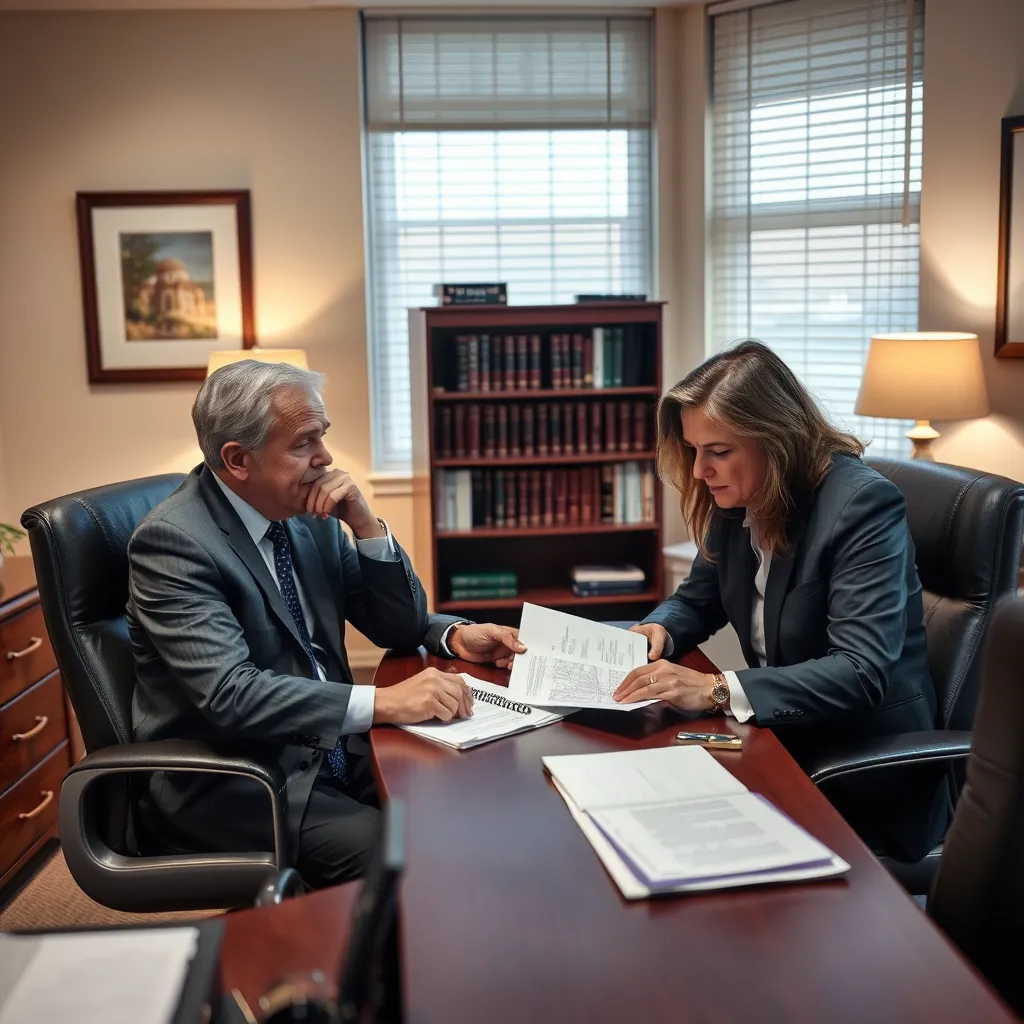
Desertion Divorce Lawyer Chesapeake, VA
Desertion divorce in Virginia is a fault‑based ground that permits the circuit court to end the marriage when one spouse willfully deserts or abandons the other for a continuous period of at least one year (Va. Code § 20‑91). The Chesapeake Circuit Court has exclusive original jurisdiction over all divorce actions in the city, and the firm’s Richmond location regularly represents clients who live in Chesapeake, Deep Creek, Great Bridge, and Greenbrier. Proving desertion requires more than physical separation; the spouse bringing the action must show both a voluntary departure and an intention not to return. Mr. Sris, a former prosecutor who founded Law Offices Of SRIS, P.C. in 1997, leads a team of experienced Of Counsel attorneys who concentrate in family law matters. For a consultation about a desertion divorce in Chesapeake, reach our location at (888) 437‑7747. Law Offices Of SRIS, P.C. – Advocacy Without Borders.
What Desertion Divorce Means in Chesapeake, Virginia
Virginia law recognizes desertion as a fault ground for absolute divorce. Under Va. Code § 20‑91, a spouse may file a complaint for divorce when the other spouse has willfully deserted or abandoned the marriage for one year or longer. Desertion does not require the parties to live in separate households in every case; the critical questions are whether the departing spouse intended to leave the marriage permanently and whether the separation was without justification or consent.
In Chesapeake, all divorce complaints are filed in the Chesapeake Circuit Court at 307 Albemarle Drive. The court has authority to dissolve the marriage, classify and divide marital property, award spousal support, and resolve child custody and visitation if those issues are included in the divorce action. Standalone custody, support, and protective‑order matters are heard in the Chesapeake Juvenile & Domestic Relations District Court, but the divorce itself remains with the circuit court.
Because Virginia is an equitable distribution state, the circuit judge does not automatically split marital property equally. Instead, the court weighs eleven factors listed in Va. Code § 20‑107.3 to reach a fair division. A fault ground such as desertion may be one circumstance the court considers when determining how to distribute assets, although desertion alone does not guarantee a larger share of property. Spousal support may also be influenced by fault, especially if the desertion caused economic hardship.
Desertion cases often involve disputed facts: whether the leaving was truly willful, whether the spouse who remained consented to the departure, or whether the couple later reconciled, which restarts the one‑year period. Mr. Sris and his Of Counsel are familiar with these legal standards and with the procedures followed in the Chesapeake Circuit Court.
How Mr. Sris and His Of Counsel Handle Desertion Divorce Cases
When a client meets with the firm about a desertion divorce, the first step is a thorough factual review. The attorney asks about the chronology of the separation, the circumstances under which the spouse left, any written or verbal statements about returning, and whether the parties have had any contact during the separation period. Because the one‑year statutory requirement is strict, verifying the timeline is essential before any complaint is filed.
After evaluating the facts, Mr. Sris and his Of Counsel determine whether desertion is the strongest available ground. In some situations, a no‑fault divorce based on a one‑year separation may be simpler and less contentious, especially if the parties have already divided their property and resolved support informally. The attorney explains the advantages and risks of each approach so the client can make an informed decision.
If a desertion complaint is filed, the firm prepares the necessary pleadings and attends all court appearances at the Chesapeake Circuit Court. Pendente lite motions for temporary spousal support, custody, or exclusive use of the marital residence can be brought early in the case to protect the client’s interests while the divorce is pending. Discovery—including depositions, requests for production of documents, and interrogatories—is used to gather evidence that supports or refutes the claim of desertion.
Many desertion cases settle through negotiation or mediation before trial. Mediation is available but not mandatory in Virginia, and the firm’s attorneys are prepared to advocate for a favorable settlement. When trial is necessary, Mr. Sris and his Of Counsel present the evidence to the judge, who determines whether the statutory requirements for desertion have been satisfied and resolves any remaining property, support, or custody issues. Throughout the process, the attorneys work to achieve a favorable outcome while keeping the client informed of developments and practical choices.
About Mr. Sris and His Of Counsel Team
Mr. Sris, Owner and Founder of Law Offices Of SRIS, P.C., has built a multi‑state practice that spans Virginia, Maryland, the District of Columbia, New Jersey, and New York. A former prosecutor, he brings a trial‑focused perspective to every family law matter. Mr. Sris testified before the Virginia House Courts of Justice Committee in support of 2019 HB 635 (chief patron Del. David Bulova).
Mr. Sris is assisted by a team of Of Counsel attorneys who concentrate in family law, criminal defense, and related practice areas. The Of Counsel are non‑employee attorneys who bring a range of experience from prior work as prosecutors, state troopers, and litigators. Together, Mr. Sris and his Of Counsel handle divorce actions in the Chesapeake Circuit Court and related custody and support matters in the Chesapeake Juvenile & Domestic Relations District Court. The firm serves clients from its Richmond location at 7400 Beaufont Springs Drive, Suite 300, Room 395, Richmond, VA 23225. Consultations are by appointment; call (888) 437‑7747 to schedule.
Frequently Asked Questions
What is desertion divorce in Virginia?
Desertion divorce is a fault‑based divorce ground available when one spouse willfully deserts or abandons the other for at least one year. The desertion must be without the other spouse’s consent and with the intention to permanently end the marriage. The Chesapeake Circuit Court adjudicates these cases. To discuss your situation, call (888) 437‑7747.
How do I prove desertion in a Virginia divorce?
Proof of desertion typically requires evidence showing the spouse left voluntarily, intended not to return, and remained away for one continuous year. Testimony, correspondence, financial records, and witness statements can all help. An experienced attorney can evaluate the evidence and present it to the court. For a consultation, reach Mr. Sris and his Of Counsel at (888) 437‑7747.
Can I file for desertion divorce in Chesapeake if my spouse left Virginia?
Yes. Virginia courts require that at least one party be a resident and domiciliary of Virginia for six months before filing, but the deserting spouse’s location does not bar the action. Service of process can be accomplished according to Virginia rules. Contact Law Offices Of SRIS, P.C. at (888) 437‑7747 to discuss jurisdiction and service.
How does desertion affect property division in Virginia?
Virginia is an equitable distribution state, and the judge may consider fault when deciding how to divide marital assets. While desertion does not automatically award a larger share of property, it can be one factor the court weighs under Va. Code § 20‑107.3. To learn how fault may affect your case, call (888) 437‑7747.
Do I need a lawyer for a desertion divorce in Chesapeake?
While you are not legally required to hire a lawyer, desertion divorce involves proving fault and meeting strict statutory requirements. An attorney can help gather evidence, prepare the complaint, and advocate for your interests in the Chesapeake Circuit Court. Reach Law Offices Of SRIS, P.C. at (888) 437‑7747 to schedule a consultation.
What is the difference between a no‑fault divorce and a desertion divorce in Virginia?
A no‑fault divorce requires a separation period of either one year or six months with a signed agreement if no minor children are involved. No blame is assigned. Desertion divorce is fault‑based and requires proof of willful abandonment for one year; fault can affect property division and support. For guidance on which ground fits your case, call (888) 437‑7747.
For additional information, see Virginia Code Title 20 – Domestic Relations and Chesapeake Circuit Court. Related pages: Fairfax County Family Law, Fairfax City Family Law, Falls Church Family Law, Prince William County Family Law.
Attorney advertising. Prior results do not guarantee a similar outcome.
Case results depend on a variety of factors unique to each case.