
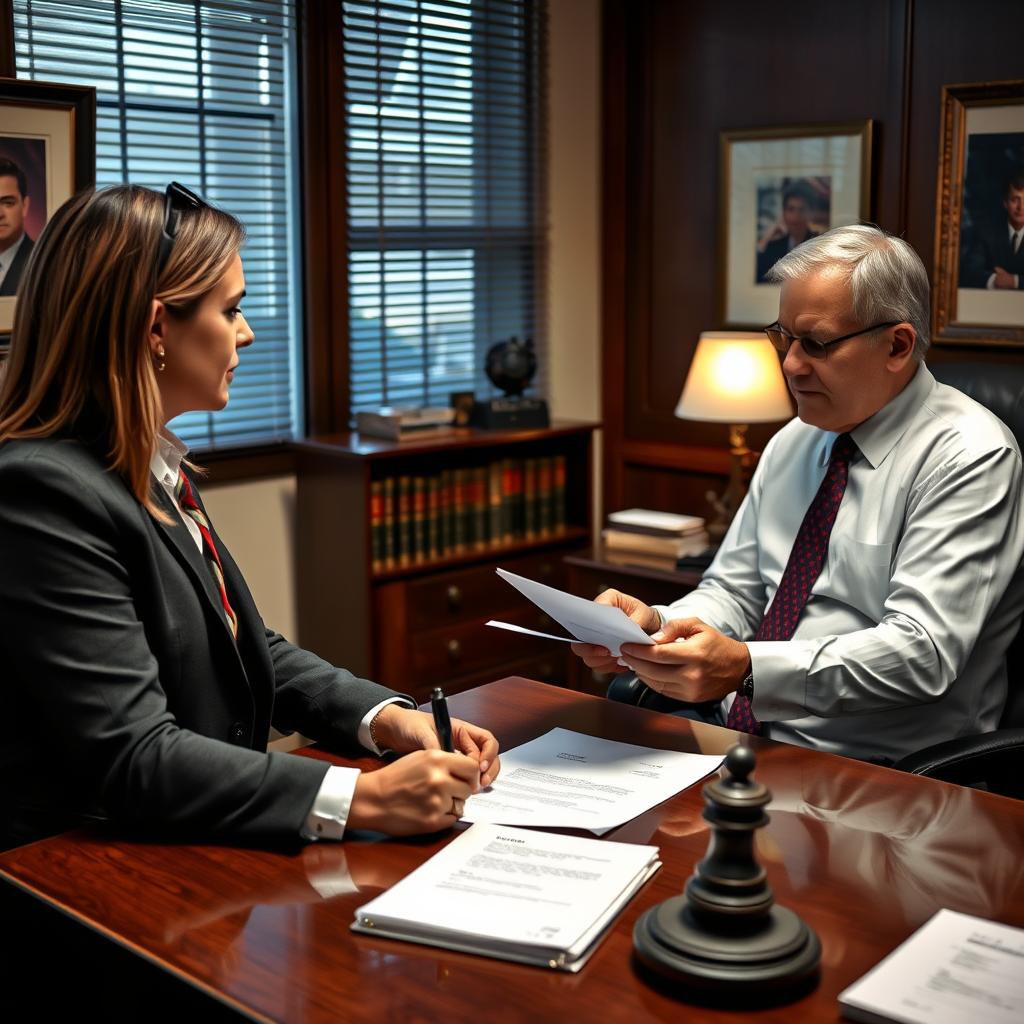
Felon in Possession lawyer Near Me
Law enforcement officers throughout the country investigate individuals who are prohibited from possessing firearms. When a person with a prior felony conviction is accused of having a gun—or even a single round of ammunition—prosecutors may bring charges under 18 U.S.C. § 922(g)(1), the federal statute that makes it unlawful for certain categories of people to possess firearms. A federal felon‑in‑possession charge is not a minor matter; the government devotes extensive resources to these cases, and a conviction can lead to a substantial prison sentence. If you are looking for a Felon in Possession lawyer near me, you need counsel who understands federal criminal procedure, the United States Sentencing Guidelines, and how to challenge the evidence the government intends to present. Law Offices Of SRIS, P.C. represents people facing federal firearm charges in multiple jurisdictions. To request a consultation, call (888) 437‑7747. Law Offices Of SRIS, P.C. – Advocacy Without Borders.
What a Federal Felon‑in‑Possession Charge Involves
Under 18 U.S.C. § 922(g), it is a federal offense for anyone who has been convicted of a crime punishable by more than one year in prison—or who falls within one of several other prohibited categories—to ship, transport, receive, or possess a firearm or ammunition. The charge is often referred to as “felon in possession” because the most common scenario involves a defendant with a prior felony record allegedly found with a weapon. Federal authorities, such as the Bureau of Alcohol, Tobacco, Firearms and Explosives (ATF) or the Federal Bureau of Investigation (FBI), typically lead the investigation, and the case is prosecuted by the United States Attorney’s Office in the federal district where the alleged possession occurred. Because these are federal charges, they proceed in the United States District Court, not in a local state courthouse.
A felon‑in‑possession indictment can arise from a variety of circumstances: a firearm discovered during a traffic stop, a search of a residence, or an investigation following a report of domestic disturbance. The government must prove that the defendant knew he or she possessed the firearm and knew of the prior disqualifying conviction. The definition of “firearm” is broad—it includes not only operable guns but also frames, receivers, and sometimes even ammunition. Because federal sentencing guidelines impose significant prison terms and judges have substantial discretion after United States v. Booker, the outcome of a case can vary widely based on how the charges are charged, the defendant’s prior record, and the quality of the legal defense. Law Offices Of SRIS, P.C. Concentrates on federal criminal defense and helps clients evaluate the prosecution’s evidence and develop a strategy from the earliest stage.
How Mr. Sris and the Firm’s Of Counsel Attorneys Approach Federal Firearm Cases
Federal criminal practice is different from state court. The investigation often involves multiple agents, grand jury proceedings occur behind closed doors, and the prosecution typically presents its case through documentary evidence, forensics, and cooperating witnesses. Mr. Sris and the firm’s Of Counsel attorneys examine every aspect of the government’s case. They look for Fourth Amendment violations that may require suppression of evidence, analyze whether the government can prove the “knowing possession” element beyond a reasonable doubt, review the lawfulness of the underlying search or seizure, and evaluate whether the prior conviction actually qualifies as a predicate offense under the statute. In some cases, it may be possible to negotiate for a reduced charge or a sentence below the advisory guideline range. In others, a motion to suppress can lead to dismissal of the charges entirely.
Because every federal case is assigned to a specific Assistant United States Attorney and a federal judge with particular practices, counsel familiar with those personalities and procedures can make informed decisions about how to proceed. Mr. Sris, a former prosecutor, understands how the government builds its case, and the firm’s Of Counsel attorneys draw on extensive experience in federal litigation. They also coordinate with any state‑court matters that may arise in parallel—for example, a related state firearm charge or a violation of probation—to ensure that a strategy in one court does not unintentionally harm the client in another. The goal is to protect the client’s rights at every stage, from the initial appearance and detention hearing through trial or sentencing.
About Mr. Sris and the Firm’s Of Counsel Attorneys
Mr. Sris, Owner and Founder of Law Offices Of SRIS, P.C., is a former prosecutor who has practiced law since 1997. He is admitted in Virginia, Maryland, the District of Columbia, New Jersey, and New York, and he personally handles complex federal and state criminal matters. Mr. Sris testified before the Virginia House Courts of Justice Committee in support of 2019 HB 635 (chief patron Del. David Bulova), demonstrating his commitment to the legal process at the legislative level. The firm’s Of Counsel attorneys bring additional experience in federal criminal defense, having handled matters in different districts and a range of federal felony charges. Every attorney works directly with clients to understand the facts and to provide a thorough defense.
Law Offices Of SRIS, P.C., founded in 1997, serves individuals in Virginia, Maryland, the District of Columbia, New Jersey, and New York. The firm’s focus on federal criminal law means the legal team stays current with evolving decisions from the Supreme Court, the federal circuit courts, and the United States Sentencing Commission. If you are charged with a felon‑in‑possession offense, you can speak with a knowledgeable attorney who will explain the process and your options. To request a consultation, call (888) 437‑7747.
Frequently Asked Questions
What is a federal felon‑in‑possession charge under 18 U.S.C. § 922(g)?
It is a felony charge brought by the United States Attorney’s Office against a person who is legally prohibited from possessing a firearm or ammunition due to a prior qualifying conviction and is alleged to have possessed such an item. The statute lists several categories of prohibited persons, but the most common is someone with a prior felony conviction that could have resulted in a sentence exceeding one year. The charge is often filed in U.S. District Court, and the penalties can be severe. Because a federal indictment often follows a lengthy investigation, early legal advice can make a significant difference.
Do I need a lawyer if I am under investigation for felon in possession?
Yes, you should contact a federal criminal defense attorney immediately. Even before an arrest or indictment, federal agents may attempt to speak with you, execute search warrants, or seek information from friends and family. Anything you say can be used against you in court. An experienced attorney can advise you on how to interact with investigators and can begin building a defense before charges are filed. Law Offices Of SRIS, P.C. offers consultations to discuss your situation. Call (888) 437‑7747.
How does the government prove a felon‑in‑possession case?
The prosecution must prove three elements beyond a reasonable doubt: (1) the defendant was a person prohibited from possessing a firearm due to a prior qualifying conviction; (2) the defendant knowingly possessed a firearm or ammunition; and (3) the firearm or ammunition had traveled in or affected interstate commerce. The interstate commerce element is usually satisfied by evidence that the firearm was manufactured in a different state. The defendant’s prior conviction is introduced through court records. The central dispute often centers on whether the defendant knowingly possessed the item—for example, whether the firearm was actually under the defendant’s control or whether fingerprints or DNA link the defendant to the weapon.
What are some defenses to a federal felon‑in‑possession charge?
Common defenses include challenging the legality of the search or seizure under the Fourth Amendment, disputing the element of knowing possession, contesting whether the prior conviction actually qualifies as a prohibited-status offense, and arguing that the defendant’s conduct falls within a narrow statutory exception or justification. For example, if the firearm was discovered during a warrantless search without valid consent or probable cause, the evidence may be suppressed. In some cases, the defense may introduce evidence that the defendant had no knowledge that a firearm was present—perhaps because it belonged to someone else and the defendant was merely a passenger in a car. Every case is evaluated on its unique facts.
What should I do if I am contacted by federal agents about a firearm?
Do not speak with federal agents without a lawyer present. You have a constitutional right to remain silent and to request an attorney. Politely but firmly decline to answer questions and state that you wish to speak with a lawyer. Then contact a federal criminal defense attorney as soon as possible. Law Offices Of SRIS, P.C. can be reached at (888) 437‑7747. The firm’s attorneys can communicate with the investigators on your behalf and ensure that your rights are protected from the outset.
Can I be charged with felon in possession even if I did not own the firearm?
Yes. Ownership is not required; the government need only prove that you “possessed” the firearm or ammunition. Possession can be actual (the item was on your person, in your hand) or constructive (the item was in a place you controlled, such as a vehicle you were driving or a room you occupied). Even a brief momentary handling can be enough. Whether a specific set of facts constitutes possession is a fact‑intensive question, and a skilled defense attorney will examine all of the circumstances to determine whether the government can meet its burden.
For guidance on your specific situation, reach Law Offices Of SRIS, P.C. at (888) 437‑7747.
Related practice areas: federal criminal defense, Virginia federal criminal defense, federal criminal defense in VA, MD, and DC.
Outbound primary‑source authority: 18 U.S.C. § 922 – Unlawful acts, U.S. District Court for the Eastern District of Virginia, U.S. District Court for the Western District of Virginia.
Attorney advertising. Prior results do not guarantee a similar outcome. Results may vary.
Case results depend on a variety of factors unique to each case.