
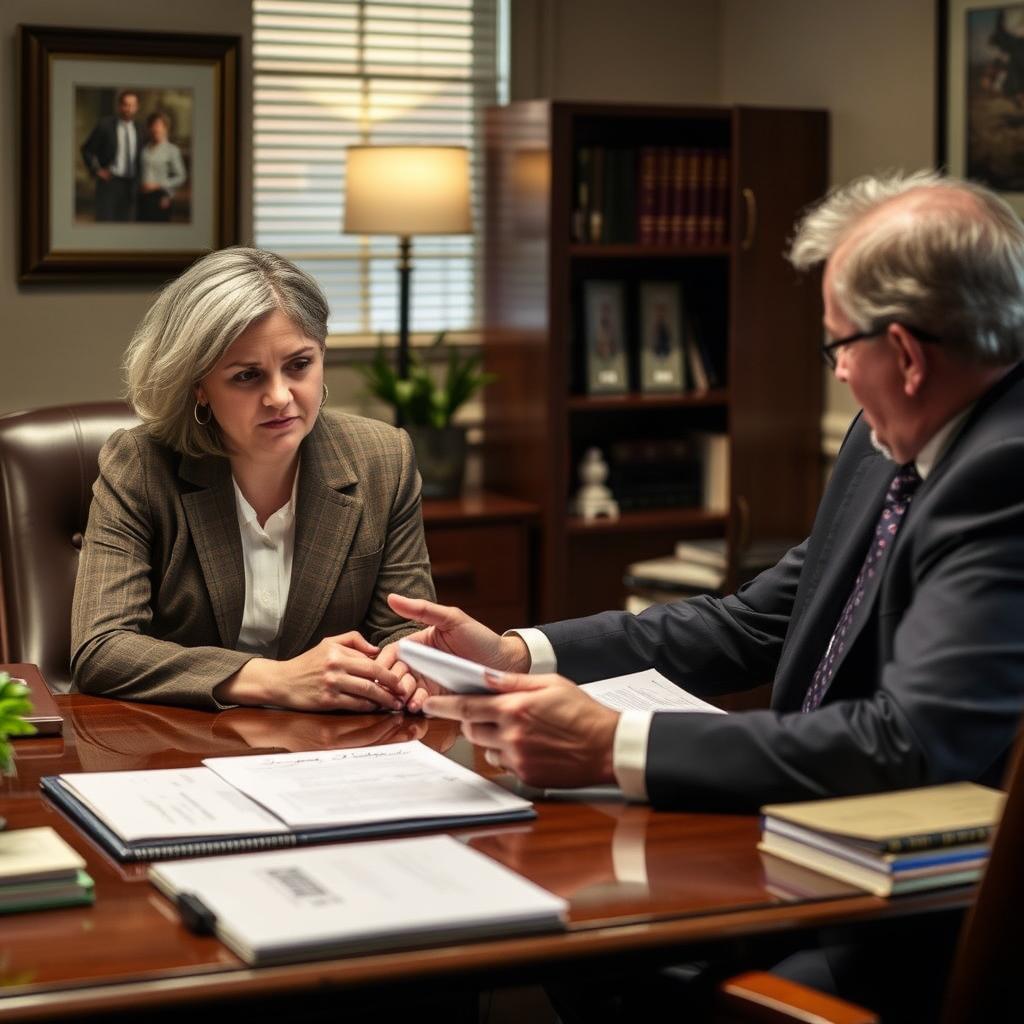
Norfolk Military Divorce Lawyer Poquoson, VA
For service members and military spouses stationed in the Hampton Roads region — including Naval Station Norfolk, Joint Base Langley‑Eustis, and the surrounding communities — divorce carries legal considerations that civilian cases do not. The Poquoson Circuit Court hears divorce and equitable distribution matters, while the Poquoson Juvenile and Domestic Relations District Court handles custody, visitation, and support. At Law Offices Of SRIS, P.C., Mr. Sris and his Of Counsel bring over 120 years of combined legal experience and 4,739+ documented firm‑wide results to military divorce cases. Results may vary. Reach our location at (888) 437‑7747 to request a consultation. Law Offices Of SRIS, P.C. — Advocacy Without Borders.
What a Military Divorce Means in Poquoson, Virginia
Poquoson, an independent city on the Chesapeake Bay, sits within the Eighth Judicial District and is part of a region heavily shaped by nearby military installations. For families connected to the armed forces, a divorce must account not only for Virginia’s domestic‑relations statutes but also for federal laws such as the Servicemembers Civil Relief Act (SCRA) and the Uniformed Services Former Spouses’ Protection Act (USFSPA).
Virginia is an equitable‑distribution state, meaning the court divides marital property fairly, though not necessarily equally, after considering the factors listed in Va. Code § 20‑107.3. When a military pension or retirement account is part of the marital estate, the USFSPA governs how much of that benefit can be treated as divisible property. A property settlement agreement signed by both parties can resolve all issues without a trial, but many military divorces require careful attention to deployment schedules, Survivor Benefit Plan elections, and the interplay between state court orders and Defense Finance and Accounting Service (DFAS) regulations. The Poquoson Circuit Court, located at 500 City Hall Avenue, Poquoson, VA 23662, handles the divorce decree and any related equitable‑distribution orders.
How Mr. Sris and His Of Counsel Handle Military Divorce Cases
Military divorce representation begins with a thorough inventory of the marital estate and a review of each party’s military service record. Because deployment, permanent change‑of‑station moves, and residency questions can affect jurisdiction, Mr. Sris and his Of Counsel confirm that Virginia has the authority to hear the case under the six‑month domiciliary requirement of Va. Code § 20‑97. They then work through the grounds for divorce — fault grounds such as adultery or desertion, or no‑fault separation — and prepare the Complaint.
When children are involved, the team addresses custody and support under the trusted‑interests standard of Va. Code § 20‑124.3, which considers factors including the child’s relationship with each parent and the stability of the home environment. A deployment or a pending PCS order can raise unique questions about custody modification and visitation, and Mr. Sris and his Of Counsel help clients craft parenting plans that account for military obligations. Throughout the process, they focus on negotiating a resolution that protects the client’s interests while minimizing the emotional and financial toll of litigation.
About Mr. Sris and His Of Counsel Team
Mr. Sris, Owner and Founder of Law Offices Of SRIS, P.C., has practiced law since 1997. A former prosecutor, he is admitted in Virginia, Maryland, the District of Columbia, New Jersey, and New York. Mr. Sris testified before the Virginia House Courts of Justice Committee in support of 2019 HB 635 (chief patron Del. David Bulova), a bill that revised the equitable‑distribution statute, Va. Code § 20‑107.3, and addressed the division of retirement assets. His Of Counsel team includes attorneys with backgrounds in state‑trooper investigation, CPS contract work, and academic research — all engaged through Excella and working collaboratively on complex family‑law matters. Together, Mr. Sris and his Of Counsel bring over 120 years of combined legal experience and 4,739+ documented firm‑wide results. Results may vary.
Frequently Asked Questions
What grounds for divorce apply to military couples in Virginia?
Virginia allows both fault‑based and no‑fault grounds. Fault grounds include adultery, cruelty, desertion for one year, and felony conviction with imprisonment for more than one year. No‑fault divorce is possible after a one‑year separation, or after six months if the couple has no minor children and a signed separation agreement. The same grounds apply regardless of whether one party is a service member.
How does Virginia divide a military pension in divorce?
Virginia courts treat the marital share of a military pension as divisible property under Va. Code § 20‑107.3. The USFSPA allows state courts to divide disposable retired pay, and a properly drafted Qualified Domestic Relations Order (QDRO) or military pay division order is required to effectuate the division. The 2019 revision to Va. Code § 20‑107.3(g) clarified certain procedural aspects of retirement‑account division, a change that Mr. Sris supported during the legislative process.
Can a deployed service member delay a divorce?
Yes. Under the Servicemembers Civil Relief Act (SCRA), a service member may request a stay of proceedings for at least 90 days if military duties materially affect the ability to participate. The court may grant additional stays, but the act does not permanently prevent a divorce from moving forward. The non‑military spouse may still proceed if the court determines that the service member’s rights are adequately protected.
Do I need to file for divorce in Poquoson if we live in military housing?
Filing venue is determined by residency, not by the location of a military installation. If at least one spouse has been a domiciliary of Virginia for the required six months, the Complaint can be filed in the county or city where either party lives. Military housing on a base does not, by itself, create domicile; the servicemember or spouse must show intent to remain in the state. The Poquoson Circuit Court has jurisdiction when the venue requirements are met.
How does child custody work when one parent deploys?
Deployment is treated as a temporary absence for custody purposes. Virginia courts may enter a temporary custody order that provides for the deployed parent’s return after deployment. Parenting plans should address communication during deployment, designation of a temporary caregiver, and the process for resuming the pre‑deployment schedule. The trusted‑interests factors in Va. Code § 20‑124.3 guide the court’s decision, and a parent’s military service is not counted against them solely because of deployment. India is not a signatory to the 1980 Hague Convention on Civil Aspects of International Child Abduction.
What is the Servicemembers Civil Relief Act, and how does it affect my divorce?
The SCRA is a federal law that provides various protections to active‑duty service members, including the ability to stay civil proceedings, protection from default judgment, and limits on interest rates. In a divorce, the SCRA can affect the timing of the case and may require the non‑military spouse to take extra steps to ensure proper notice and to avoid a default. An attorney familiar with the SCRA can help navigate these procedures.
How long does a military divorce take in Poquoson?
An uncontested divorce with a signed separation agreement generally takes 2‑4 months from the filing of the Complaint to the final decree. Contested divorces — those involving unresolved custody, support, or property disputes — routinely extend to 9‑18 months. Complex cases with business valuations, retirement accounts, or international elements may take longer. The court’s calendar and the pace of discovery influence the timeline.
Can I get spousal support (alimony) in a military divorce?
Virginia courts may award spousal support under Va. Code § 20‑107.1 after considering 13 statutory factors, including the duration of the marriage, the standard of living, and each spouse’s earning capacity. Military pay and allowances are part of the income analysis, and a support award may be temporary or permanent. The USFSPA also allows state courts to enforce spousal support against a servicemember’s disposable retired pay in certain circumstances.
What should I bring to a consultation for a military divorce?
Bringing your most recent Leave and Earnings Statement (LES), any previous separation agreements or court orders, a list of assets and debts, tax returns, and information about child‑care arrangements helps the attorney understand your case. Also bring any documentation related to your military service, including deployment orders or PCS notifications, so that SCRA and schedule issues can be discussed early.
Do I need a lawyer for a military divorce if we agree on everything?
Even when both parties agree, a lawyer can ensure that the separation agreement correctly addresses military‑specific issues such as the division of a pension, Survivor Benefit Plan coverage, and the language required by DFAS for direct payment. A properly drafted agreement can prevent future disputes and may also streamline the uncontested divorce process. For guidance on your specific situation, reach Law Offices Of SRIS, P.C. at (888) 437‑7747.
Related family‑law locations: Fairfax County Family Law Lawyer · Fairfax Family Law Attorney · Falls Church Family Law Lawyer · Prince William County Family Law Lawyer · Manassas Family Law Lawyer
Primary sources: Virginia Code Title 20 — Domestic Relations · Poquoson General District Court · Virginia’s Judicial System
Attorney advertising. Prior results do not guarantee a similar outcome. Case results depend on a variety of factors unique to each case. Results may vary.