
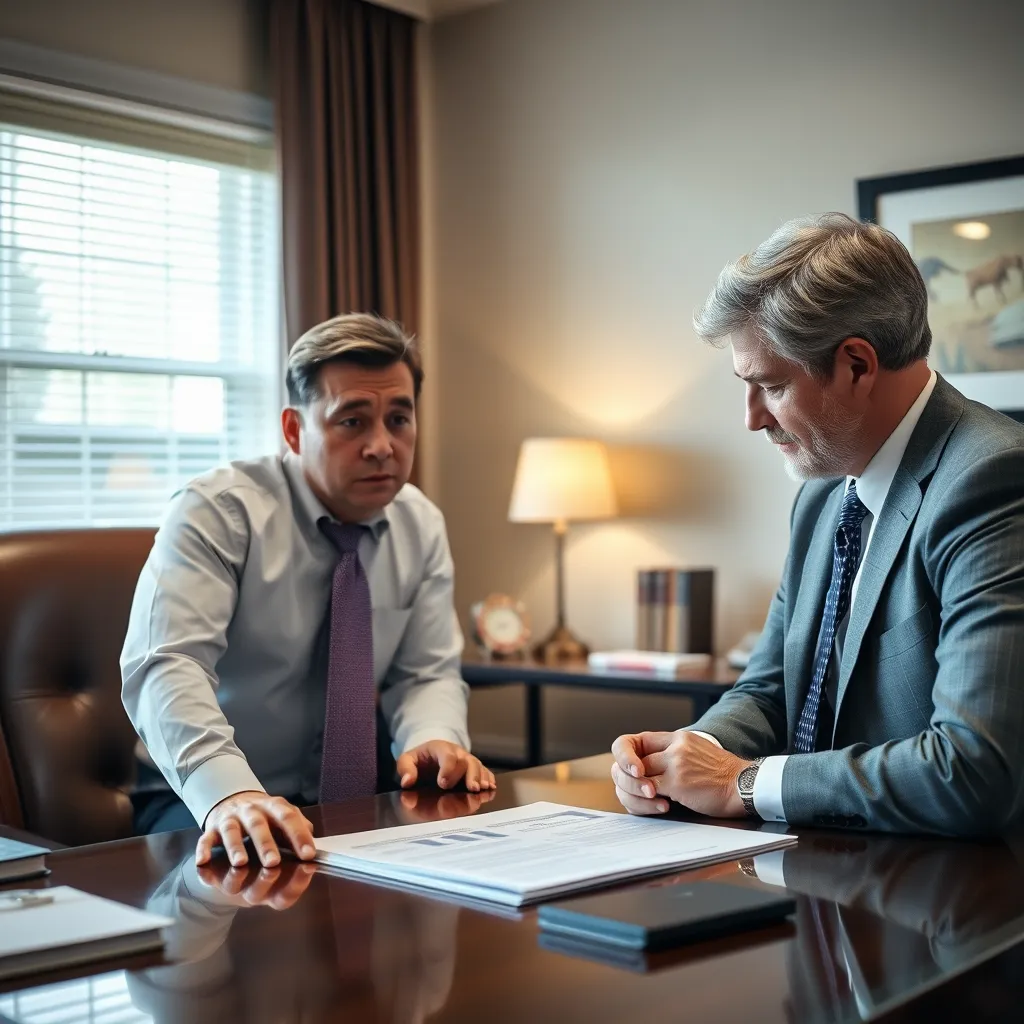
Permanent Alimony Lawyer Poquoson, VA
If you are facing a divorce or separation in Poquoson and have concerns about long‑term financial support, you need a clear understanding of how Virginia courts handle permanent alimony. In Virginia, spousal support — often called alimony — may be awarded as part of a divorce proceeding or as a separate maintenance matter. When a court determines that one spouse will need ongoing assistance and the other has the ability to pay, it may order permanent (indefinite) spousal support. The decision is governed by the factors set out in Va. Code § 20‑107.1, and the matter is heard in the Poquoson Circuit Court, located at 500 City Hall Avenue, Poquoson, VA 23662. Mr. Sris and his Of Counsel team at Law Offices Of SRIS, P.C. Concentrate a substantial portion of their family law practice on spousal support matters, including permanent alimony, for clients in Poquoson and throughout Virginia. Reach our Richmond location at (888) 437‑7747 to request a consultation. Law Offices Of SRIS, P.C. — Advocacy Without Borders.
What Permanent Alimony Means in Poquoson
Permanent alimony in Virginia is spousal support ordered for an indefinite duration. It is not automatically granted; the court must find, after considering the statutory factors under Va. Code § 20‑107.1, that the requesting spouse has a need for ongoing support and that the other spouse has the ability to provide it. The law directs the court to weigh over a dozen considerations, including the earning capacities and obligations of each party, the duration of the marriage, the standard of living established during the marriage, the age and physical condition of each spouse, and any contributions one spouse made to the other’s education or career. In Poquoson, these determinations are made by the Circuit Court, which has exclusive jurisdiction over divorce, equitable distribution, and spousal support. The court’s analysis is fact‑intensive; no single factor is dispositive.
Because permanent alimony can have lifelong financial consequences, it is one of the most contested issues in a Poquoson divorce. The court may award temporary support while the case is pending, and it may order permanent support in the final decree. In many cases, the parties reach a written separation agreement that resolves all spousal support questions without a trial; that agreement, if accepted by the court, becomes part of the divorce order. When the parties cannot agree, the judge will hear evidence, often including testimony from both spouses and, in complex matters, from vocational evaluators or forensic accountants. Mr. Sris and his Of Counsel approach each permanent alimony matter with a thorough preparation that addresses the financial and personal circumstances unique to the family.
How Mr. Sris and His Of Counsel Handle Permanent Alimony Cases
The process begins with a careful inventory of the marital finances: each party’s income, assets, debts, and the lifestyle maintained during the marriage. Mr. Sris and his Of Counsel work with clients to document the standard of living, identify any disparities in earning capacity, and assess whether a spouse may be imputed income if underemployed. They then evaluate how the statutory factors under Va. Code § 20‑107.1 apply to the specific facts. This analysis informs whether the firm will pursue permanent support, a defined‑duration award, or a lump‑sum settlement.
In negotiations and, when necessary, in the courtroom, the team presents a clear, fact‑based argument. If the other side disputes the need or amount, Mr. Sris and his Of Counsel may call on independent vocational or financial attorneys to provide testimony. Because Mr. Sris keeps his personal caseload small, each permanent alimony matter receives focused attention. The goal is to achieve a resolution that protects the client’s financial future while avoiding unnecessary litigation expense, though the firm prepares every case as if it will go to trial. Throughout the process, clients are kept informed of developments and of the realistic options available under Virginia law.
About Mr. Sris and His Of Counsel Team
Mr. Sris, Owner and Founder of Law Offices Of SRIS, P.C., has practiced family law for more than 25 years. He is admitted in Virginia, Maryland, the District of Columbia, New Jersey, and New York, and he has concentrated a substantial portion of his practice on divorce and spousal support matters. Mr. Sris testified before the Virginia House Courts of Justice Committee in support of 2019 HB 635 (chief patron Del. David Bulova), a bill that revised the state’s equitable distribution statute. His Of Counsel team brings a range of complementary experience, including backgrounds in litigation, business valuation, and law enforcement. Together, Mr. Sris and his Of Counsel bring over 120 years of combined legal experience, and the firm has 4,739+ documented firm-wide results. Results may vary.
Frequently Asked Questions
What is the difference between temporary and permanent alimony in Virginia?
Temporary alimony (pendente lite support) is awarded while a divorce is pending to maintain the financial status quo. Permanent alimony is set forth in the final divorce decree and continues indefinitely unless a court later modifies or terminates it. The same statutory factors apply, but permanent support is based on a fuller factual record.
How does a Virginia court decide whether to award permanent alimony?
The court considers the 13 factors listed in Va. Code § 20‑107.1, including the length of the marriage, the standard of living, each spouse’s earning capacity, ages and health, and any contributions to the other’s education or career. No single factor controls; the judge weighs them all together to determine whether an indefinite award is appropriate.
Can permanent alimony ever be modified or terminated?
Yes. A party can petition the Poquoson Circuit Court to modify or terminate permanent alimony if there has been a material change in circumstances, such as a significant change in the payor’s income, the recipient’s remarriage, or cohabitation in a relationship analogous to marriage. The court will apply the same statutory factors to any modification request.
How long does it take to resolve permanent alimony in a Poquoson divorce?
If the parties reach a separation agreement that includes spousal support, the matter can be resolved in as little as two to four months from filing. Contested spousal support issues, particularly those requiring discovery and expert witnesses, may extend the divorce timeline to nine months or more. The Poquoson Circuit Court’s docket and the complexity of the finances are the primary drivers of the schedule.
Do I need a lawyer for a permanent alimony case in Virginia?
You are not required to have a lawyer, but permanent alimony often involves intricate financial analysis and statutory factors that are difficult to navigate without experienced counsel. An attorney can help present your financial circumstances fairly, preserve your rights, and work toward a settlement that reflects your long‑term needs. For guidance on your specific situation, reach Law Offices Of SRIS, P.C. at (888) 437‑7747.
What should I bring to a consultation about permanent alimony?
Bring any existing separation agreement, recent pay stubs or tax returns for both spouses, a list of monthly living expenses, mortgage or lease documents, and records of any retirement accounts, investments, or business interests. The more complete the financial picture you provide, the better the attorney can evaluate your potential spousal support claim.
Also serving: Fairfax County · Fairfax City · Falls Church · Prince William County · Manassas
Attorney advertising. Prior results do not guarantee a similar outcome. Results may vary.
Case results depend on a variety of factors unique to each case.
Attorney advertising. Prior results do not guarantee a similar outcome.