
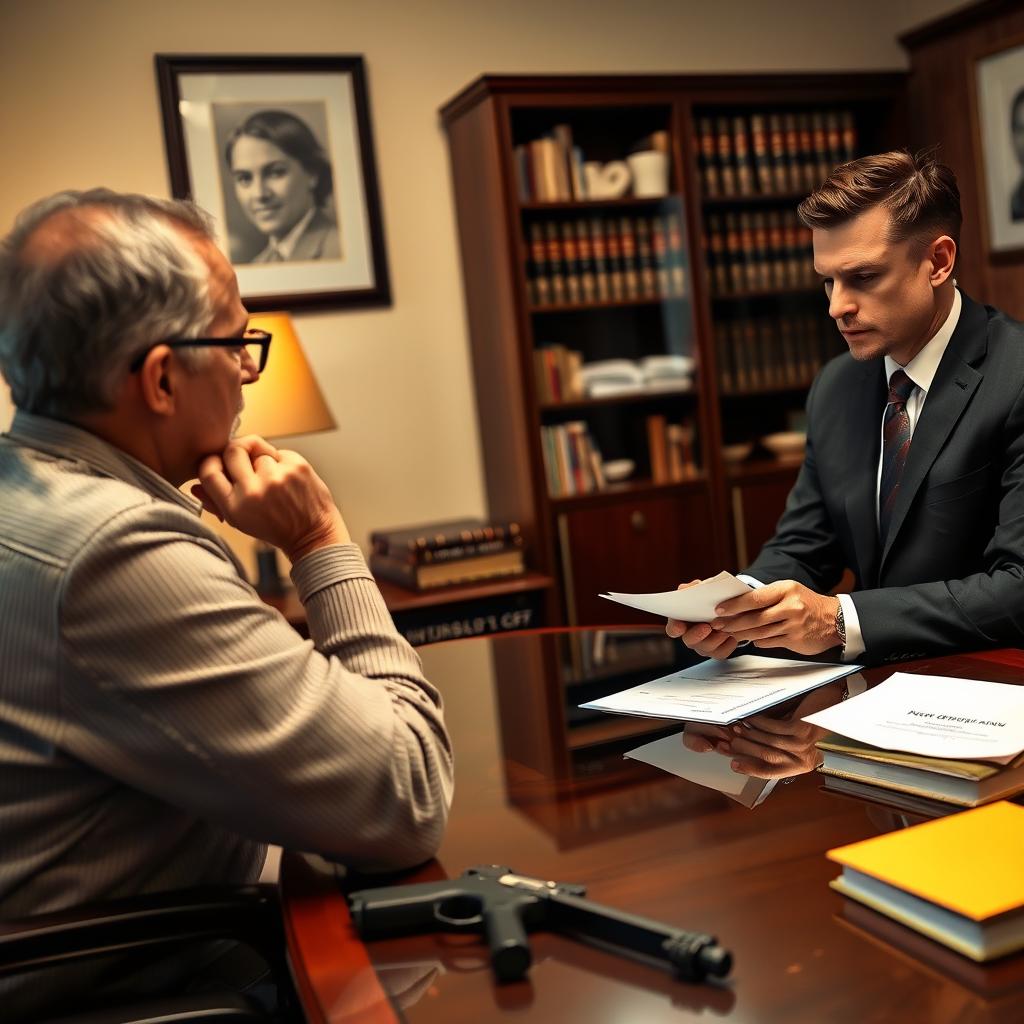
Possession of Firearms in Drug Trafficking Crime lawyer Near Me
Federal charges alleging possession of a firearm in connection with a drug trafficking crime carry severe consequences, including lengthy mandatory minimum prison sentences and the possibility of additional consecutive years if a firearm is involved. If you are in the Chesapeake, Virginia area and facing an investigation or indictment in the Eastern District of Virginia, you need a defense that understands both the federal drug laws and the way firearms allegations intensify the government’s case. Mr. Sris, Owner and Founder of Law Offices Of SRIS, P.C., and the firm’s Of Counsel attorneys represent clients throughout Virginia, including Chesapeake and the surrounding Hampton Roads region, in federal criminal matters. Early intervention can make a measurable difference in how the case unfolds. To discuss your situation, reach Law Offices Of SRIS, P.C. at (888) 437-7747. Law Offices Of SRIS, P.C. – Advocacy Without Borders.
What Federal Firearms in Drug Trafficking Charges Mean in the Chesapeake, Virginia Area
Federal drug trafficking prosecutions are built primarily under the Controlled Substances Act, 21 U.S.C. § 841, which makes it unlawful to manufacture, distribute, dispense, or possess with intent to distribute a controlled substance. When the government alleges that a defendant possessed a firearm during and in relation to a drug trafficking crime, it can add separate charges that dramatically increase the sentencing exposure—often with mandatory minimum terms that run consecutively to any sentence for the underlying drug offense. These cases are investigated by federal agencies such as the DEA, ATF, and FBI, and are prosecuted by the United States Attorney’s Office for the Eastern District of Virginia, which includes the Alexandria, Richmond, and Norfolk divisions. If you live in Chesapeake or elsewhere in Hampton Roads, your case will likely be heard in the Norfolk federal courthouse, a venue known for its swift docket and experienced federal prosecutors.
The Eastern District of Virginia is often referred to as the “Rocket Docket” because cases move quickly from indictment to trial. A firearm allegation in a drug trafficking case signals the prosecution’s intent to pursue the most serious penalties available. It also means the government will introduce evidence of the weapon, which can influence a jury. When Mr. Sris and the firm’s Of Counsel attorneys appear in federal court, they bring an understanding of how these cases are built—from the investigation and surveillance methods to the charging decisions and sentencing guidelines. The defense starts with analyzing whether the firearm was actually possessed “in furtherance” of the drug crime or was merely present, and whether the government can prove each element beyond a reasonable doubt.
How Mr. Sris and the Firm’s Of Counsel Attorneys Handle Federal Firearms in Drug Trafficking Cases
A federal firearms-and-drug case requires a defense strategy that addresses both the drug trafficking allegations and the firearm enhancement. Mr. Sris and the firm’s Of Counsel attorneys focus on several key areas from the beginning: reviewing the search warrant and the legality of any seizure of the firearm, challenging whether the firearm and the drug activity are sufficiently connected under federal law, and evaluating whether the evidence supports the charge that the firearm was used or carried during the drug trafficking crime. Dependable defense counsel also scrutinizes the government’s chain of custody for the firearm and any forensic testing, as well as the credibility of cooperating witnesses or informants.
In the Eastern District of Virginia, the pace of the proceedings means that an early evaluation of the discovery and a well-prepared motion practice can be essential. Mr. Sris and the firm’s Of Counsel attorneys coordinate with investigators and, when helpful, forensic experts, while engaging with the Assistant United States Attorneys about the case’s strengths and weaknesses. In cases where the evidence is overwhelming, the strategy may concentrate on mitigating the sentencing exposure—such as arguing for a lower drug quantity, demonstrating that the firearm was not used in a threatening manner, or seeking a downward departure from the advisory sentencing guidelines under the safety valve provision or substantial assistance to the government. Every step of the process is aimed at protecting the client’s rights and minimizing the consequences where possible.
About Mr. Sris and the Firm’s Of Counsel Attorneys
Mr. Sris is the Owner and Founder of Law Offices Of SRIS, P.C., a multi-state law firm practicing in Virginia, Maryland, the District of Columbia, New Jersey, and New York. A former prosecutor, Mr. Sris has concentrated his practice on complex criminal defense, including federal drug and firearms cases, since founding the firm in 1997. He has testified before the Virginia House Courts of Justice Committee in support of 2019 HB 635 (chief patron Del. David Bulova). Mr. Sris and the firm’s Of Counsel attorneys bring extensive combined legal experience. Results may vary.
The firm’s Of Counsel attorneys are experienced litigators who appear regularly in federal court. Each brings significant trial and negotiation experience to the table. The team’s approach is collaborative: every client benefits from the collective insight of attorneys who have handled federal criminal matters across multiple jurisdictions. For those in Chesapeake and throughout Virginia, the firm’s Fairfax location serves as a central point for consultation and case preparation. Contact is by appointment only, and the firm’s toll-free number—(888) 437-7747—is answered at all times.
Frequently Asked Questions
What is possession of a firearm in a drug trafficking crime under federal law?
The federal statute that covers possessing a firearm in furtherance of a drug trafficking crime imposes additional prison time beyond the sentence for the underlying drug offense. The charge typically requires proof that the defendant knowingly possessed a firearm and that the firearm was used or carried during and in relation to a drug trafficking crime, or that the defendant possessed the firearm in furtherance of that crime. The presence of a firearm in a house where drugs are sold, for example, can be sufficient for a charge, even if the firearm was not brandished. The government does not need to show that the firearm was fired or directly used; the connection to the drug crime is key.
What penalties could I face if convicted of possessing a firearm during a drug trafficking crime?
Conviction on a federal firearm-in-furtherance charge can add a mandatory consecutive prison term that significantly increases the total sentence, often doubling or tripling the time a person faces. For a first conviction involving a firearm, the additional sentence may start at a minimum of five years consecutively. If the firearm is brandished, the mandatory minimum rises to seven years, and if discharged, to ten years. These are in addition to whatever sentence is imposed for the underlying drug trafficking count. The advisory sentencing guidelines and any mandatory minimums tied to the drug quantity further compound the exposure. A detailed evaluation of the case’s specific facts is critical.
How does a Virginia-based lawyer defend against these kinds of federal charges?
A defense attorney reviews every aspect of the investigation—the search warrant, the firearm seizure, and the government’s evidence tying the firearm to the drug activity—to identify weaknesses and challenge the prosecution’s case. Common defenses include arguing that the firearm was not actually possessed by the defendant (for example, if it belonged to another person and the defendant did not know about it), that any possession was not “in furtherance” of the drug crime but was for an unrelated lawful reason, or that the evidence was obtained in violation of the Fourth Amendment. In the Eastern District of Virginia, experienced counsel also knows how to navigate the court’s expedited schedule and may negotiate with prosecutors for dismissal or reduction of the firearm charge in exchange for a plea to the drug count alone.
Do I need a federal criminal defense lawyer if I am just being investigated?
Yes, because statements made to investigators before charges are filed can later become the cornerstone of the prosecution’s case. Many federal firearm and drug trafficking cases begin with undercover buys, wiretaps, or search warrants. If you learn you are under investigation, you should not wait for an indictment to retain counsel. Early engagement allows the attorney to advise you on interactions with law enforcement, preserve favorable evidence, and sometimes present information to the prosecutor that may persuade them not to bring charges in the first place. Being proactive can substantially affect the direction of the case.
What should I do if I am arrested on federal gun and drug charges in Chesapeake, Virginia?
If you are arrested, you should invoke your right to remain silent and ask to speak with an attorney immediately; do not discuss the facts with anyone else, including family members or cellmates, as those statements can be used against you. After an arrest, the case proceeds quickly through initial appearance and detention hearing before a federal magistrate judge in Norfolk. The court will determine whether you are released on conditions or held pending trial. The prosecutor will also be preparing for an indictment. Having a defense attorney in place before or shortly after the initial appearance gives you the strongest footing to argue for pretrial release and to begin crafting the defense.
Can I be charged with a firearm offense even if the gun was not on my person?
Yes, federal law does not require that the firearm was physically on you; possession can be constructive, meaning you had the power and intention to exercise control over the firearm. If a firearm is found in a location where you have access—such as a vehicle you were driving, a residence you occupy, or a bag belonging to you—prosecutors can argue constructive possession. The government must prove that you knew about the firearm and had the ability to control it. A strong defense may challenge those elements, showing that others had equal access or that the circumstances do not support a finding of knowing possession.
How does the Eastern District of Virginia process a federal gun and drug case?
The Eastern District of Virginia moves cases faster than most other federal districts, and your case could be scheduled for trial within 70 days of indictment as required by the Speedy Trial Act, excluding certain pretrial motion delays. After arrest, an initial appearance and a detention hearing are held within days. If the case is indicted, an arraignment follows, and discovery is turned over. The defense attorney will then file motions, including challenges to the sufficiency of the indictment or the admissibility of evidence. Plea negotiations often continue throughout this period. Because the timeline is condensed, significant work must be done early to evaluate the evidence and prepare the defense strategy.
What role does an attorney play in federal sentencing for a firearm in drug trafficking conviction?
A defense attorney’s role at sentencing is to argue for the lowest possible sentence under the advisory guidelines and to present mitigating factors that could persuade the judge to depart below the guidelines range. At a federal sentencing hearing, the court considers the presentence investigation report, the guidelines calculation, mandatory minimums, and arguments from both sides. The defense will present evidence about the defendant’s background, mental health, role in the offense, and any acceptance of responsibility. For firearm charges that carry mandatory consecutive sentences, the attorney may challenge whether the firearm enhancement applies at all—for example, by arguing that the gun was not used or carried in relation to the drug crime. Each factor can meaningfully affect the total time a person serves.
For further information on federal criminal defense in Virginia, see our federal criminal defense practice. Additional resources include drug trafficking defense and firearm offense representation. To learn more about the court system, visit the official website of the U.S. District Court for the Eastern District of Virginia.
Attorney advertising. Prior results do not guarantee a similar outcome.
Case results depend on a variety of factors unique to each case.