
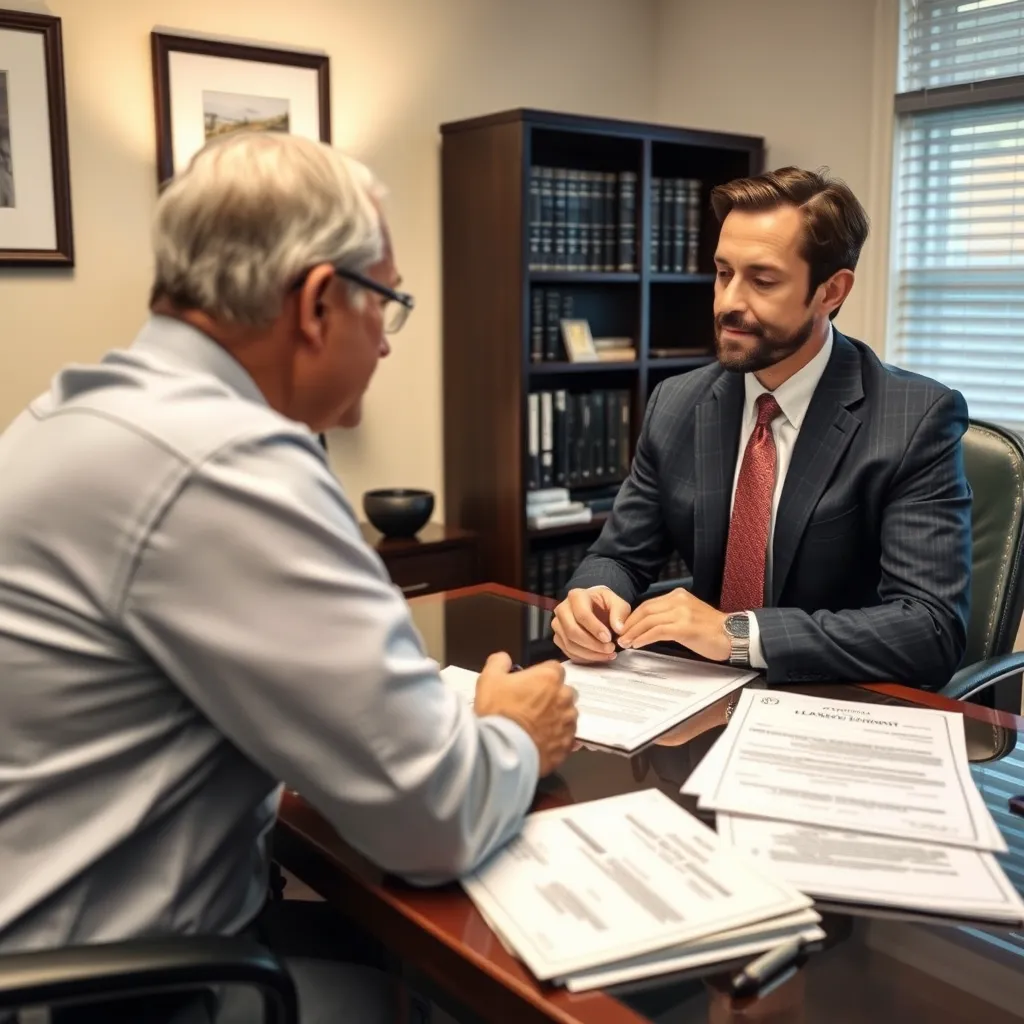
Property Settlement Lawyer Poquoson, VA
You and your spouse have decided to separate. After building a life in Poquoson, the focus turns to dividing what you own: the family home, retirement funds, a business. These property settlement questions can become contentious, and the outcome depends on Virginia’s equitable distribution law. A clear understanding of your rights is essential. Law Offices Of SRIS, P.C., with over 120 years of combined legal experience and 4,739+ documented firm-wide results, helps clients navigate property division in divorce. Results may vary. Mr. Sris and his Of Counsel work to protect your financial interests. Call (888) 437-7747 to request a consultation. Law Offices Of SRIS, P.C. — Advocacy Without Borders.
How a Property Settlement Lawyer Can Help
When you work with a property settlement lawyer, you gain an advocate who understands the full scope of marital asset division. Your attorney can help you negotiate a fair division of property and debts, draft a comprehensive property settlement agreement, and, if necessary, represent you before a judge in Poquoson Circuit Court. In Virginia, spouses may resolve property division through a written separation agreement that is later incorporated into the divorce decree. If you and your spouse cannot agree, the court will apply equitable distribution factors to reach a decision. An experienced lawyer ensures your interests are represented, whether you are negotiating out of court or litigating a contested matter.
Because property settlement often involves complex assets—real estate, retirement accounts, stock options, or a family business—working with a lawyer who understands valuation and classification issues can make a significant difference. The team at Law Offices Of SRIS, P.C. has experience handling property division for clients across Virginia, including high‑net‑worth and multifaceted estates. You will receive guidance on what to disclose, how separate property is treated, and the likely range of outcomes under the law.
What to Expect When You Work With Us
The property settlement process typically begins with an initial consultation. You will meet with Mr. Sris or one of the firm’s Of Counsel to discuss your particular financial circumstances, your goals, and the history of your marriage. From there, we gather financial disclosures—bank statements, tax returns, deeds, investment account summaries—to build a complete picture of the marital estate. We then work with you to develop a negotiation strategy or, if settlement is not possible, prepare for litigation.
Throughout the process, you can expect regular communication. We explain each step, from identifying marital versus separate property to valuing assets and assessing the tax implications of a proposed division. If a trial becomes necessary, we present your case to the Poquoson Circuit Court, arguing how the equitable distribution factors apply to your situation. The timeline varies based on case complexity and the court’s calendar, but we keep you informed every step of the way.
How Virginia’s Equitable Distribution Works
Virginia is an equitable distribution state, not a community property state. Under Virginia Code § 20‑107.3, the court divides marital property in a manner that is fair—but not necessarily equal. The court must consider eleven statutory factors, including the length of the marriage, the contributions of each spouse (monetary and non‑monetary), the age and health of each party, how and when the property was acquired, and tax consequences. The goal is a just and reasonable division, not a 50/50 split.
Marital property includes most assets and debts accumulated during the marriage, regardless of whose name is on the title. Separate property—gifts or inheritances received by one spouse, property owned before the marriage, and assets acquired after separation—remains with that spouse and is not subject to division. However, when separate and marital property are commingled, the classification can become disputed. Working with a lawyer who understands how to trace assets and argue for a favorable classification is critical. For contested matters, the court may also consider fault in the dissolution of the marriage when determining the equitable distribution.
About Mr. Sris and His Of Counsel Team
Mr. Sris, Owner and Founder of Law Offices Of SRIS, P.C., has practiced family law for decades. A former prosecutor, he understands how the other side approaches litigation and brings that perspective to negotiating favorable settlements or presenting compelling arguments in court. Mr. Sris testified before the Virginia House Courts of Justice Committee in support of 2019 HB 635 (chief patron Del. David Bulova), legislation that revised the state’s equitable distribution statute. His firsthand involvement with the law that governs property division gives clients a valuable perspective.
Mr. Sris leads a team of Of Counsel who collectively bring over 120 years of combined legal experience and 4,739+ documented firm-wide results to family law matters. Results may vary. Each Of Counsel attorney is an experienced practitioner, and the team works together to analyze every case from multiple angles. Whether you need help drafting a separation agreement or litigating the division of a complex marital estate, you will have the benefit of a team with thorough knowledge of Virginia family law.
Common Questions About Property Settlement in Poquoson
Is Virginia a community property state?
No. Virginia is an equitable distribution state. The court divides marital property fairly but not necessarily equally, based on eleven statutory factors. Separate property—such as gifts, inheritances, and assets owned before the marriage—is not divided. For guidance on your specific situation, reach Law Offices Of SRIS, P.C. at (888) 437-7747.
What is equitable distribution?
Equitable distribution is the process by which a Virginia court divides marital assets and debts in a divorce. The judge applies Virginia Code § 20‑107.3 to determine a fair outcome. The factors considered include the length of the marriage, each spouse’s contributions, and the economic circumstances of each party. The result is a division the court deems just and reasonable, not a mathematical 50/50 split. To discuss the details of your matter, contact Law Offices Of SRIS, P.C. at (888) 437-7747.
Do I have to go to court for property division?
Not necessarily. Many couples resolve property division by signing a written property settlement agreement, which is then submitted to the court. If both parties agree on the division, the divorce may proceed without a trial. If you cannot reach an agreement, the Poquoson Circuit Court will hold a hearing and decide based on the evidence. For a consultation, reach Mr. Sris and his Of Counsel at (888) 437-7747.
How is separate property different from marital property?
Marital property is anything acquired during the marriage, regardless of whose name is on the title. Separate property includes assets owned before the marriage, inheritances, and gifts received by one spouse during the marriage. Separate property is not subject to division. However, if separate and marital assets become intertwined, classification can become contested. A lawyer can help trace the character of each asset.
What if my spouse is hiding assets?
If you suspect your spouse is not fully disclosing assets, your lawyer can work with forensic accountants and file discovery requests to uncover hidden accounts, property, or income. The court can consider a spouse’s failure to disclose when making its division. To discuss your concerns, reach Law Offices Of SRIS, P.C. at (888) 437-7747.
Can we agree on our own property division?
Yes. Virginia encourages parties to negotiate their own division through a property settlement agreement. Once signed by both spouses, the agreement can resolve all property, debt, and support issues without a trial. The court will generally accept a voluntary, fair agreement. To discuss the details of your matter, contact Law Offices Of SRIS, P.C. at (888) 437-7747.
How long does a property settlement case take?
The time required depends on whether the parties can agree, the complexity of the assets, and the court’s calendar. An uncontested case resolved by a signed agreement may finalize in a few months, while contested litigation can extend significantly longer. Speak with an attorney to receive an estimate based on your specific facts. For guidance, reach Law Offices Of SRIS, P.C. at (888) 437-7747.
Do I need a lawyer for a property settlement agreement?
While you are not legally required to have a lawyer, a property settlement agreement is a legally binding document that can affect your finances for years. An experienced attorney can review the agreement, explain your rights, and help you negotiate terms that protect your interests. For a consultation, call (888) 437-7747.
Schedule a Consultation
If you are facing a divorce in Poquoson and need help resolving property settlement issues, contact Law Offices Of SRIS, P.C. at (888) 437-7747. Our Richmond Location serves clients throughout the Poquoson area. By appointment only. Call to request a consultation.
Richmond Location
7400 Beaufont Springs Drive, Suite 300, Room 395
Richmond, VA 23225
(888) 437-7747
By appointment only.
Attorney advertising. Prior results do not guarantee a similar outcome. Results may vary.
Case results depend on a variety of factors unique to each case.